Israelis Vote as Gaza Toll Tops 70,000 in Split Knesset Race
Benjamin Netanyahu faces a tight contest for the 120-seat parliament, with polls showing a narrow gap between pro and anti-prime minister blocs.
By Pablo Montgomery ·
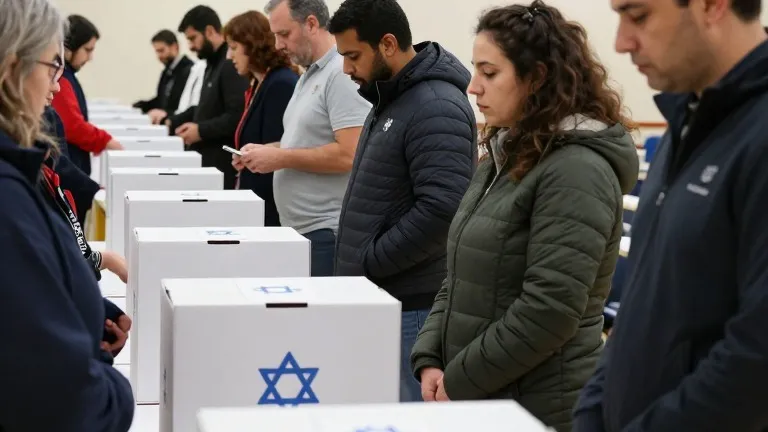
Israeli voters cast ballots on Tuesday in a Knesset election defined by a personal divide over Prime Minister Benjamin Netanyahu rather than traditional left-right policy differences. The race centers on whether the country will continue under a leader who has held the premiership for 19 of the past 30 years. Polls indicate the two main camps are running neck and neck for the 120 available seats.
Gadi Eisenkot leads the opposition challenge as a former Israel Defense Forces chief of staff. He entered politics four years ago and runs under the party name Yashar, which translates to straight or direct. At a rally in Modi'in this week, he outlined proposals for US-style term limits for prime ministers, arguing that power corrupts. Supporter Noa Sadeh, 56, described her preference for Eisenkot as a desire for someone who does the work rather than just talks.
The opposition alliance includes former Prime Minister Naftali Bennett and Avigdor Lieberman, both from the nationalist right who previously served with Netanyahu before splitting with him. On the far right, Itamar Ben-Gvir’s Otzma Yehudit party positions itself as the force pulling Netanyahu further right. Yishai Fleisher, a party representative, told voters in Bet Shemesh that Netanyahu tends to drift left and must be anchored by a party advocating for more settlements and the death penalty.
The conflict in Gaza has become a central metric for the election, with more than 70,000 Palestinians killed since October 2023. Israel states that one-third of the deceased were Hamas combatants, yet the militant group remains operational. This toll, combined with the failure to destroy Iran’s nuclear program as promised, has damaged Netanyahu’s international standing and domestic support among those who question his strategic decisions.
Netanyahu faces ongoing legal and political pressures, including a corruption trial and the Qatargate affair involving his closest aides. His political survival relies on a loyal base built over three decades, which has remained intact despite credible warnings of the October 7, 2023, attack that were not acted upon. His allies maintain that army and intelligence chiefs kept him uninformed, a claim they have not substantiated.
The outcome may hinge on a single seat, prompting liberal and secular expatriate Israelis to travel home to vote. This demographic is not fully captured by standard polling. The opposition must also navigate the question of relying on Arab parties to form a majority, a prospect that pro-Netanyahu media, such as Channel 14, have used to keep his opponents on the defensive. Channel 14’s Yinon Magal recently called Eisenkot a Moroccan monkey, a slur that opposition leaders have raised but Eisenkot has avoided repeating.
State ceremonies marked the 31st anniversary of the 1995 assassination of Yitzhak Rabin on Thursday, a date that resonates with the current political mood. A video of young Israelis singing Shir LaShalom at a Negev music festival spread widely this week, symbolizing a renewed interest in peace. Yair Golan, leader of the Democrats, expressed optimism that opposition leaders can agree on a long-term regional security process, though he avoided using the term peace process.
The election result will determine if Netanyahu can outmaneuver rivals in coalition talks, a skill for which he is known. The vote reflects a complex calculation among voters weighing personal accountability against strategic stability. The final tally will reveal if the 70,000 Gaza deaths and the 19-year tenure are enough to displace the incumbent from his long-held position.
Source: The Guardian
More Business · World news · Rip-Off Report · Report a business · Got a Story?