Arab Parties Hold Key to Breaking Israeli Political Deadlock After Record Turnout
A historic surge in Arab voter participation has left both major political blocs unable to form a government without their support.
By Kofi Greco ·
The political landscape in Israel has shifted dramatically following a record turnout among Arab citizens, leaving both the coalition led by Prime Minister Benjamin Netanyahu and the opposition bloc headed by Gadi Eisenkot without enough seats to govern alone. The Ra’am party, led by Mansour Abbas, saw its representation grow from five to eight seats, while the Joint List secured 11. Together, these parties now hold 19 of the 120 seats in the Knesset, making them a pivotal force in any potential coalition negotiations.
Mansour Abbas declared shortly after the exit polls were released that his party would translate this electoral power into an influential political presence. He stated, “We are here, not on the sidelines.” This massive participation breaks with decades of tradition in which many Arab citizens abstained from voting in protest over the Palestinian conflict and a perceived lack of political responsiveness.
Analysts attribute the surge in voter engagement, which reached approximately 80 percent compared to 53.2 percent in the previous election, to a sense of existential fear regarding the policies of the outgoing far-right government. National Security Minister Itamar Ben-Gvir oversaw mass demolitions in the Negev region, while Finance Minister Bezalel Smotrich proposed plans to Judaize Arab-majority areas. A post-election poll indicated that nearly 92 percent of Arab voters cited fear of these two ministers as their primary motivation for casting a ballot.
The question now is whether Jewish political leaders are prepared to accept Arab parties as legitimate partners in governing. Yohanan Plesner, president of the Israel Democracy Institute, noted that the high turnout reflects a desire for the Arab population to join the democratic process. However, he cautioned that it remains to be seen if the political system is willing to respond to this demand. Ra’am has already demonstrated a willingness to join a government, having done so in 2021. The Joint List, comprising three parties focused on socialist and nationalist issues, has also indicated openness to cooperation to change the current leadership.
Despite this potential, significant skepticism persists within the opposition bloc. While most parties in Eisenkot’s camp, excluding the Democrats led by Yair Golan, have not entirely ruled out an alliance, many remain hesitant. Mairav Zonszein, an analyst with the International Crisis Group, observed that including Arab parties may be the only viable option for removing Netanyahu. She questioned whether leaders like Eisenkot, Naftali Bennett, and Avigdor Lieberman are ready to compromise on an issue they made a frontline campaign point.
Critics of such a coalition argue that some Arab parties hold anti-Zionist views. Gadi Taub, a professor at Hebrew University of Jerusalem, described including these parties as “ridiculous,” citing statements made by Balad leader Sami Abu Shehade after the October 7 attack. Taub noted that attempts to ban these parties from the election were blocked by the Supreme Court. He argued that Israeli law should prevent parties that do not acknowledge a Jewish state from running for parliament.
In the days following the election, Netanyahu and his supporters have challenged the legitimacy of the Arab vote, accusing the Arab parties of fraud and foreign interference. Netanyahu posted on social media that the elections were stolen through criminal offenses. However, the Central Elections Committee, led by Supreme Court Justice Noam Sohlberg, stated that the ongoing investigation into alleged foreign funding would not change the election results. Sohlberg emphasized that even if suspicions were substantiated, the integrity of the overall process would remain intact.
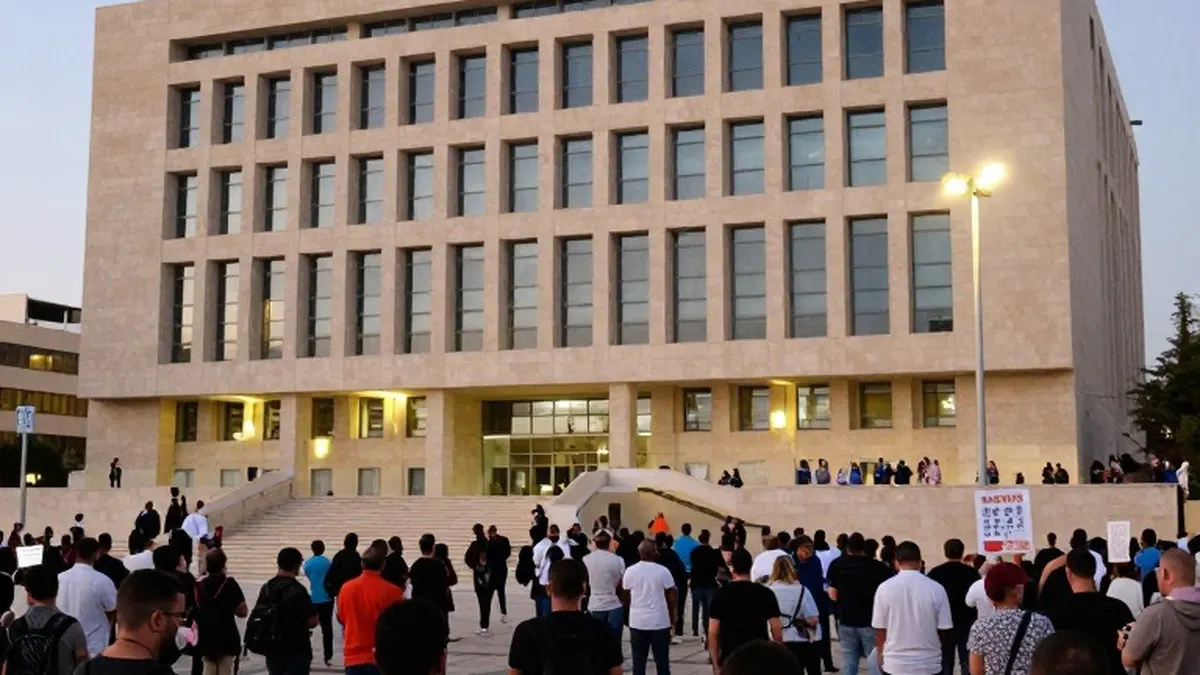
Protests have erupted across the country, with demonstrators on both sides gathering to voice their positions. In Tel Aviv, a small group opposed to an Arab-led coalition chanted against “terror supporters” entering the government, while larger crowds in other areas urged Eisenkot to form a collaboration. Mohamed Darawshe, a political analyst, warned that if the Arab parties are blocked by their natural partners in Jewish society, it could lead to a loss of faith in the Israeli political system. He described such a scenario as a vote of no confidence in the promise of political equality outlined in the Declaration of Independence.
Source: The Jerusalem Post