Caribbean leaders urge UK to move beyond debt relief to formal apology and reparations
The CARICOM Reparations Commission argues that Prime Minister Andy Burnham's openness to an apology must be followed by substantive actions, including debt cancellation and monetary compensation, rather than just improved repayment terms.
By Pablo Montgomery ·
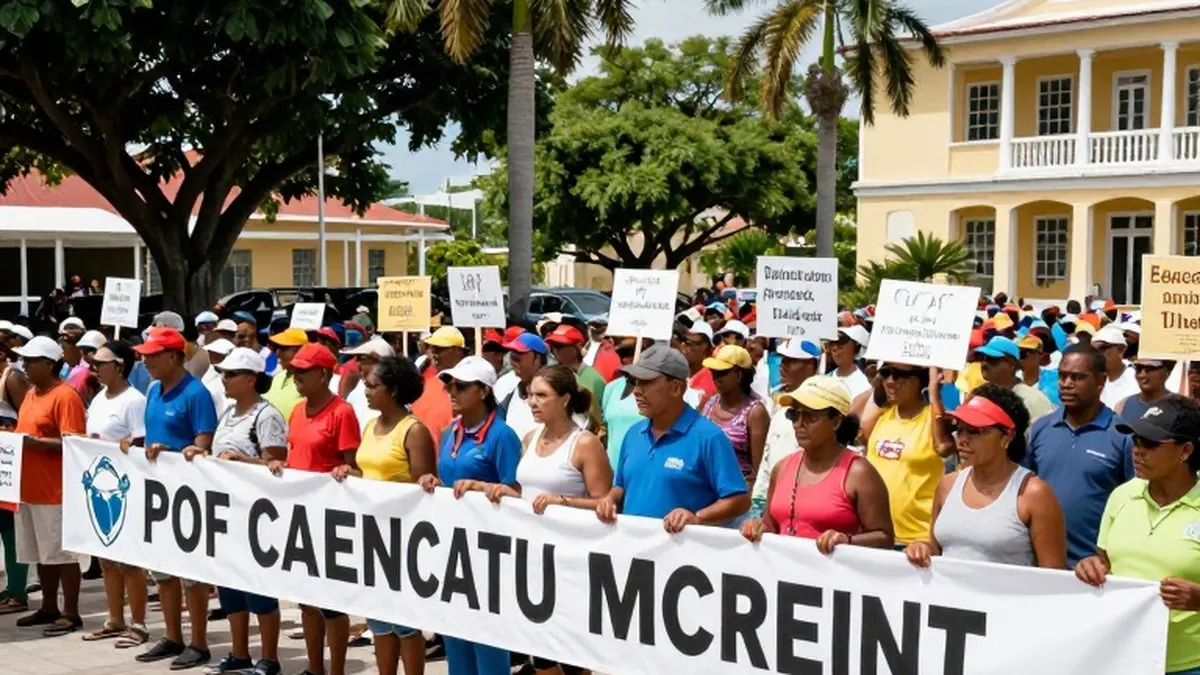
The CARICOM Reparations Commission has welcomed the recent indication from United Kingdom Prime Minister Andy Burnham that he is open to calls for a formal apology regarding Britain’s role in the transatlantic trafficking of enslaved Africans and chattel slavery. While the commission views this development as positive, it emphasizes that an apology is only the first step toward healing the wounds and cultural destruction caused by centuries of colonialism and oppression.
For some time, the commission has sought a dialogue on apology and reparations, a request that has previously been met with expressions of deep sorrow and regret rather than a formal acknowledgment. This shift in tone comes as King Charles III prepares to address the Commonwealth Heads of Government Meeting in Antigua this Tuesday. Civil society groups are protesting at the event, demanding both an apology and concrete reparations, suggesting that the timing of the prime minister’s statement may be influenced by this upcoming gathering.
The commission explains that a formal apology is critical to the reparations process. According to CARICOM’s Ten Point Plan for Reparatory Justice, such a gesture fosters better relations between European and Caribbean states by acknowledging a shared history. It serves as an ethical and legal recognition that present-day inequalities and racial injustices are rooted in historical crimes, including the perpetuation of chattel slavery and violent colonization. An apology commits the state to non-repetition and the repair of harms inflicted on victims and their descendants.
However, the commission warns that an apology must be followed by meaningful actions that go beyond the current UK proposal of improved debt repayment conditions. The commission argues that these conditions are insufficient for addressing the deep economic legacy of enslavement. It points to the work of Sir Arthur Lewis, often regarded as the father of the modern Caribbean reparations movement, who conceptualized reparations within the framework of social and economic development.
In his 1939 book, Labour in the West Indies: The Birth of a Workers’ Movement, Lewis argued that Britain was responsible for the presence of the majority of inhabitants in the Caribbean islands, whose ancestors contributed millions to British wealth through unpaid labor. He described this over two centuries of extracted labor as a debt that must be repaid, a claim the British have largely denied despite evidence of their benefit from chattel slavery. Lewis believed that the economic transformation of the colonies could not be fully realized without the colonizer honoring this obligation.
The commission notes that recent international instruments, including CARICOM’s Ten Point Plan, a March 2026 United Nations Resolution from Ghana, and the UN Committee on the Elimination of All Forms of Racial Discrimination’s General Recommendation No 40, all affirm that transatlantic trafficking broke the world. These documents highlight how the trade created a racialized regime of violence that reduced Africans to nonhuman property and laid the blueprint for modern global power structures and enduring hierarchies.
The commission insists that the conversation must focus on actual reparations, specifically debt cancellation rooted in the lingering legacies of colonialism. It challenges the notion of a complicated history, arguing that the facts are clear: enslaved people, such as Chief Takyi in Jamaica and Black revolutionaries in Ayiti, led the fight for abolition, not Britain. From the perspective of former colonies and Africans, the crime of enslavement does not rot but is carried forward until justice is achieved.
While the UK prime minister may intend to launch a new drive on debt to allow poor countries to pay back under better conditions, the commission rejects the idea that a nation profiting from chattel slavery should escape responsibility. It demands both debt cancellation and monetary compensation, urging Britain to finally apologize and pay its debt to the Caribbean.
Source: Al Jazeera