US strikes Qeshm Island as diplomatic talks remain fragile
American forces conducted defensive attacks on Iran's Qeshm Island on Monday night while mediators in Qatar continued to push for a negotiated settlement to the conflict.
By Pablo Montgomery ·
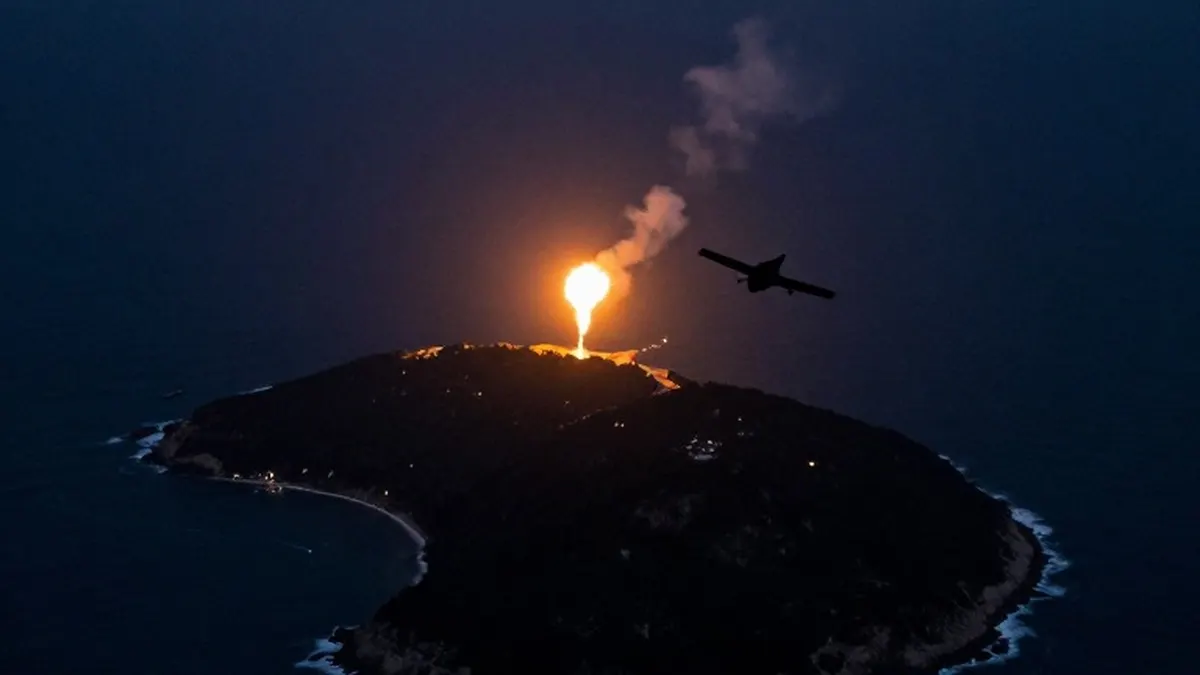
United States military forces struck Iran's Qeshm Island late on Monday, November 2, in what officials described as defensive measures. This represents the first attack on the island since June, a location analysts identify as the primary platform for Iran's asymmetric naval capabilities. The strikes occurred against a backdrop of heightened tension following the US midterm elections, with both nations maintaining simultaneous military and diplomatic postures.
According to Iran's state-owned IRNA news agency, several explosions were heard in rapid succession on the island. Witnesses reported seeing two aircraft flying over the area, which is situated off Iran's southern coast along the Strait of Hormuz. The Wall Street Journal quoted an unnamed official who stated that the strikes appeared limited and did not signal a resumption of a major military operation. The Associated Press cited a US official who explained that Washington conducted the defensive strikes in response to Iranian use of surface-to-air missiles against US assets.
The attack followed reports that the Iranian Revolutionary Guard Corps had destroyed a US MQ-9 drone east of the Strait of Hormuz. The US had previously targeted a critical desalination plant on Qeshm Island on March 7, a move Tehran criticized as a flagrant crime against civilians that cut off freshwater to thirty surrounding villages.
Diplomatic efforts led by Qatari mediators remain active but fragile. Indirect talks with Iranian officials had been ongoing in recent days, though the delegation departed Doha on Sunday without announcing a breakthrough. A draft proposal is still being circulated, and Qatari mediators traveled to Tehran on Monday night to meet with Foreign Minister Abbas Araghchi. Araghchi told IRNA that consultations were intensive and that the outcome depends on the political rationality of Washington.
Iranian President Masoud Pezeshkian stated that Supreme Leader Ayatollah Mojtaba Khamenei had granted the government specific authorities regarding negotiations with the US. This signals a shift from the breakdown of the June memorandum of understanding, when the supreme leader had expressed distrust toward the US. Pezeshkian added that Tehran intends to resolve the conflict through dialogue. Ministry spokesperson Esmaeil Baghaei noted that the ball was in the US court and that Iran's September plan to end the war remained the focus of discussions.
On the US side, Vice President JD Vance expressed hope for a diplomatic solution just hours before the strikes occurred. He told reporters that both he and the president felt optimistic about the prospects for a negotiated settlement. Meanwhile, Iranian Parliament Speaker Mohammad Bagher Ghalibaf warned on Tuesday that Iran's response to any US miscalculation would be unpredictable, asserting that the Iranian nation would not submit to threats.
Oil prices dropped by more than seven percent on Monday. President Donald Trump noted this trend on his Truth Social account, writing that Iran wants a settlement and that it could happen soon. He told media at the Lincoln Memorial Reflecting Pool that efforts were coming together nicely, which he suggested was the reason for the drop in oil prices. However, in an interview with Axios, Trump said he was in no rush to decide whether to resume strikes, noting that the US had crippled Iran financially.
The midterm elections are viewed as an inflection point for the administration's next steps. Trump has suggested he could attack Iran following the vote, telling the Right Side Broadcasting Network that the conflict would end very soon one way or the other. Observers anticipate that if strikes resume, they will likely target nuclear facilities, including the fortified Pickaxe Mountain site. Trump previously told Newsmax that the US might target this location and knock it out fast.
Source: Al Jazeera