Israel's Arab Parties Set to Back Eisenkot in Coalition Talks
With record turnout, the Joint List and Ra'am plan to support the opposition bloc to prevent a political deadlock and oust Prime Minister Netanyahu.
By Marta Price ·
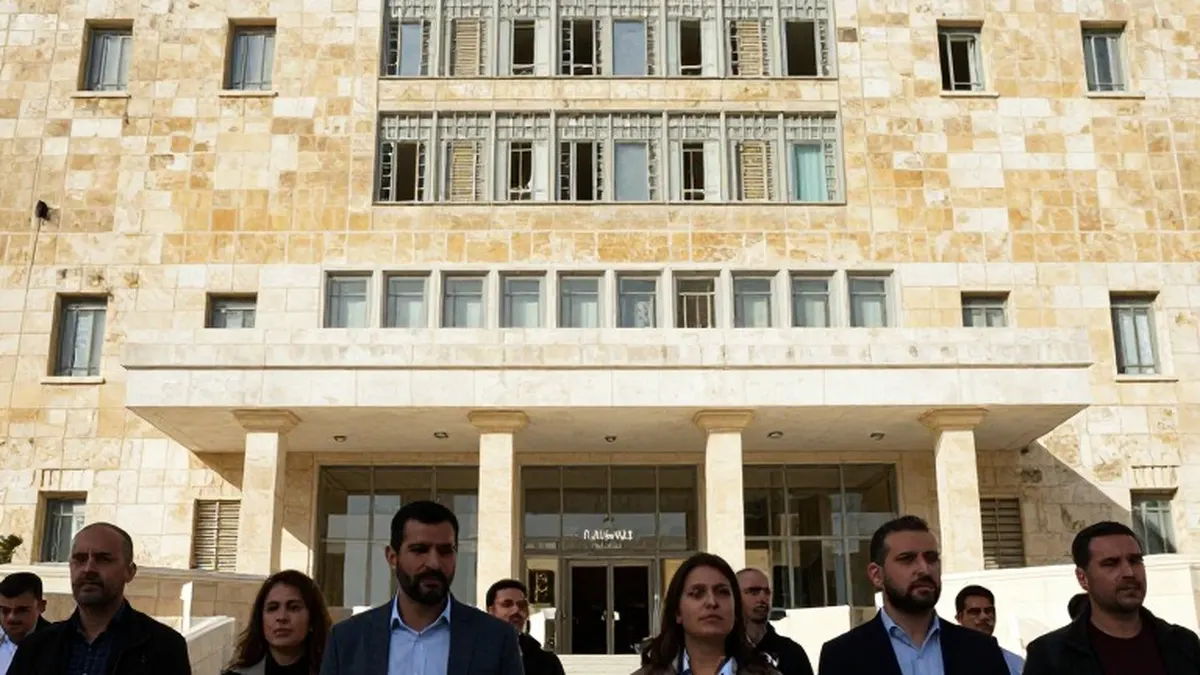
Israel's Arab political parties are preparing to support the bloc led by opposition leader Gadi Eisenkot, a move that significantly reduces the chances of Prime Minister Benjamin Netanyahu forming another government. The two main groups representing Palestinian citizens of Israel, the Joint List and Ra'am, won a record 19 seats in last week's general elections. Although the main Jewish opposition bloc, which consists of four parties, secured only 48 seats, joining forces with the Arab parties could help avoid a political impasse and the need for another election.
The opposition coalition, branded as the Change bloc, has already pledged not to partner with Netanyahu. This stance is driven by what they cite as security failures leading to the October 7 Hamas attacks and the ongoing corruption trial facing the prime minister. However, accepting support from Arab parties presents a challenge for Eisenkot. Right-wing leaders, including Netanyahu, have deployed anti-Arab rhetoric to attract Jewish voters, making the alliance a sensitive topic for the opposition.
The Arab minority in Israel, which constitutes a fifth of the population, has faced increasing marginalization since the conflict in Gaza began. Several current and former legislators have been briefly arrested for comments critical of the war and the occupation of the West Bank. Analysts suggest that as parties weigh their options, they will likely need to make compromises and potentially break promises to their base to secure a path to power.
In the recent elections, a coalition of conservative and far-right parties led by Likud won 53 of the 120 Knesset seats, falling short of a majority. Arab voter turnout doubled to approximately 80 percent, resulting in Ra'am, led by Mansour Abbas, winning eight seats and the Joint List, led by Yousef Jabareen, winning 11. Previously, Eisenkot and other opposition leaders had stated they would not form a coalition with Arab parties to appeal to their supporters. However, speculations that Eisenkot might refuse their support to avoid backlash have now given way to confirmed plans for collaboration.
Netanyahu has repeatedly claimed, without definitive proof, that the Arab parties committed election fraud with foreign backing. His camp cited the arrest of three activists suspected of bribing voters, though the Ra'am party denies involvement. The prime minister's case appears to be weakening as an Israeli court released one suspect on Sunday and placed another under house arrest. Election officials also signaled that the vote would stand, with Central Elections Committee head Noam Sohlberg stating that even if suspicions are substantiated, the integrity of the results would remain intact.
Likud has suggested that a Zionist coalition with the Arab bloc would be dangerous for Israel. This stance resonated with some protesters who gathered outside Eisenkot's home on Sunday to oppose a potential alliance. Despite this, the Joint List and Ra'am have indicated they will collaborate with the opposition to push Netanyahu out, though they may not join the formal government.
Mansour Abbas of Ra'am has said he would join an Eisenkot government if his party receives the internal security portfolio. Yousef Jabareen of the Joint List clarified in an interview that his party is ready to cooperate to remove Netanyahu and other extremist ministers, such as Itamar Ben-Gvir and Bezalel Smotrich. He stated that the Joint List has no intention of entering the government while the occupation of the West Bank continues, but it will vote with the opposition in the Knesset to allow Eisenkot to form a minority government.
The opposition bloc has placed conditions on any cooperation, requiring Arab parties to accept Israel as a Jewish state, support army conscription, and denounce Hamas. Jabareen noted that these conditions are more relevant for parties in the coalition, which the Joint List does not plan to join. The election results are scheduled to be certified on Wednesday.
Following certification, President Isaac Herzog will meet with the leaders of the 11 elected parties to determine who will be tasked with forming a government. With the Arab parties expected to name Eisenkot as their preferred partner, the opposition leader is likely to be the frontrunner to receive the mandate. The chosen candidate will have 28 days to form a coalition, with a possible 14 day extension. Parliamentarians are set to be sworn in on November 10 regardless of the outcome of these negotiations.
Source: Al Jazeera