Osasco’s Mall Boom and the Rise of Gig Work Reshape Brazil’s Presidential Race
The city’s shift from factories to service jobs has driven voters away from Lula, contributing to a record abstention rate of 33 million in the first round.
By Pablo Montgomery ·
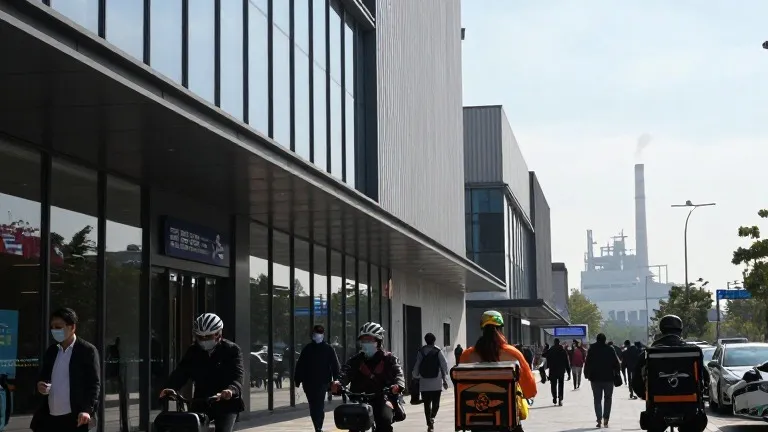
The industrial city of Osasco, located just west of São Paulo, has transformed from a hub of manufacturing into a center for retail and digital services. This economic shift is influencing the presidential run-off scheduled for Sunday, as voters in the municipality abandon left-wing President Luiz Inácio Lula da Silva for right-wing candidate Flávio Bolsonaro.
Gilberto Almazan, a metalworkers’ union leader in Osasco, describes the local change as a replacement of factories with five new shopping malls. He notes that metal, chemical, and textile plants have vanished, leaving the traditional union movement behind. Almazan observes that many workers now operate as drivers, food couriers, or small traders, a trend he terms Uber-isation. He argues that these workers prioritize flexibility in their hours over the collective welfare protections traditionally associated with Lula’s policies.
Richard Lapper, an author who has written biographies of both Lula and Jair Bolsonaro, explains that Brazil industrialized late but deindustrialized early. He identifies this pattern as a victim of his own success, meaning that while economic conditions improved, the nature of work changed faster than political strategies could adapt. Lapper points to a crisis of expectations where citizens, despite lower unemployment and removal from the UN Hunger Map, feel financial pressure from high prices, household debt, and interest rates.
In the first round of voting earlier this month, Flávio Bolsonaro won the national contest. Every candidate who has won the first round since 1989 has subsequently become president. However, 33 million Brazilians did not vote, marking the highest abstention rate since 1998. In Osasco, this disengagement was notable. Robson, a 53-year-old civil servant who previously supported Lula, cited government mismanagement and heavy taxes. Tairine, a hot dog seller, stated she is voting for Bolsonaro because she feels nothing has changed under Lula’s current administration.
Lula’s campaign is attempting to reverse this trend by organizing massive street rallies. One event in São Paulo reportedly drew one million people, with aerial footage circulating widely online. The 80-year-old president also used social media to counter claims about his age, referring to himself as the king of selfies. Meanwhile, Flávio Bolsonaro proposes cutting government spending and ministries while retaining some of Lula’s welfare programs. He also faces corruption accusations, which he denies.
The political dynamic remains complex in poorer areas. In the Maré favela in Rio de Janeiro, abstention rates were above average, yet Lula still secured victory. Vitoria, an 18-year-old mother earning under £300 a month, credits Lula with raising the minimum wage and providing free medicines. She expresses concern about Bolsonaro’s plan to designate the Comando Vermelho gang as a terrorist organization, citing police raids in Rio last year that killed more than 130 people. Andreza Dionísio, another resident, attributes low turnout to last-minute polling station changes and a general sense of hopelessness.
Religious institutions are also playing a growing role in political engagement. Evangelical churches, which serve about a quarter of Brazilians, are providing childcare, employment advice, and food. Pastor Silas Malafaia, who supports Flávio Bolsonaro, aligns the candidate’s values on family and abortion with the church’s teachings. Malafaia is currently under investigation for allegedly obstructing the coup trial of Jair Bolsonaro, a probe he describes as politically motivated. The race now hinges on whether Lula can offer a new narrative to a working class that has fundamentally changed its form of labor.
Source: BBC News
More Business · World news · Rip-Off Report · Report a business · Got a Story?