North Korea scales drone output and missile precision with Russian support
New York Times reporting indicates Moscow is exchanging military data and technology for labor and weapons, accelerating Pyongyang's modernization.
By Kofi Greco ·
North Korean soldiers and workers are now operating in Russian military facilities while Pyongyang receives technical upgrades for its arsenal. According to The New York Times, this exchange of personnel for military knowledge is reshaping the capabilities of the North Korean People's Army. The shift affects regional security calculations for South Korea and its allies, who must now budget for more complex defensive systems.
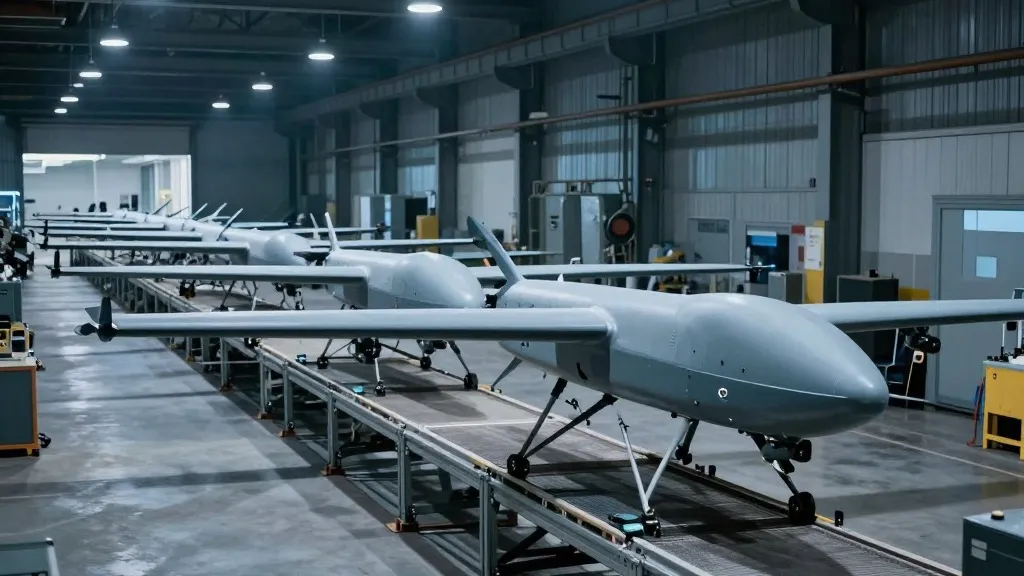
The partnership intensified after Russia began its full-scale invasion of Ukraine. Moscow has since passed military developments to Pyongyang. In return, North Korea provides soldiers, workers, and weapons. Bloomberg reported in September that up to 25,000 North Korean citizens are working at Russian military plants. A specific example is the Alabuga facility in Tatarstan, where North Korean workers are producing military drones.
Pyongyang has used this cooperation to improve its ballistic missiles. In early October, the North tested a tactical ballistic missile that it claims can carry a nuclear payload. South Korean and Japanese estimates placed the range at approximately 700 kilometers. North Korean officials asserted a range of 1,000 kilometers. The discrepancy highlights the gap between external measurements and internal claims regarding the weapon's reach.
South Korea reacted differently to this test than in previous instances. Usually, Seoul issues short statements labeling such launches as provocative. This time, South Korea test-fired its own hypersonic ballistic missile five days after the North's launch. President Lee Jae Myung observed the test. The New York Times described this rapid response as a sign of growing unease in Seoul regarding the speed of North Korean progress.
Analyst Anton Ponomarenko attributes part of this progress to access to Russian deployment data. He stated that this feedback loop has helped North Korea improve the accuracy and maneuverability of its weapons. Ponomarenko described the threat to South Korea as becoming more substantial. The exchange of data allows Pyongyang to refine targeting systems without conducting as many full-scale tests.
The focus has also shifted to unmanned systems. Russia has helped North Korea build and produce attack drones in large numbers. The New York Times noted that Pyongyang has observed the use of inexpensive drones in Ukraine and the Middle East. These conflicts demonstrated how low-cost drones can overwhelm expensive air defense systems. This observation has driven North Korea to prioritize mass production of such assets.
A North Korean military drill in September illustrated these new tactics. A drone swarm attacked a target island simultaneously with cruise and ballistic missiles. The missiles approached from different directions. This coordinated attack tested the ability of defenders to track and intercept multiple types of threats at once. The exercise suggests North Korea is integrating drones into broader missile strike packages.
The New York Times argues that these evolving tactics will force South Korea and its allies to redesign air defenses. The newspaper suggests the cost of this redesign will be exorbitant. The strategy relies on saturation, using many cheap drones to exhaust defensive resources before missiles arrive. This approach mirrors tactics seen in recent conflicts in the Middle East.
A North Korean missile forces unit has also begun deploying in western Russia. This unit could be equipped with 120 ballistic missiles and six launchers. These systems are intended for strikes against Ukraine. In August, Russia asked North Korea to provide KN-30 ballistic missiles. In June 2026, North Korea announced tests of a modernized 240mm multiple-launch rocket system. It also tested a tactical ballistic missile and a 155mm long-range artillery shell.
Source: Ukrainska Pravda
More Business · World news · Rip-Off Report · Report a business · Got a Story?