Gazans watch Israeli election with mixed hopes
Residents of Gaza await Tuesday's vote, expressing fear that a Netanyahu victory will prolong displacement and daily airstrikes.
By Marta Price ·
Israelis go to the polls on Tuesday to choose their next government, a decision that Gazan residents say will determine their immediate future. The election follows three years of war in the territory, a conflict that has left most of Gaza's infrastructure damaged and its population displaced multiple times.
The current political climate in Gaza is defined by a fragile ceasefire that began in October 2025. Despite the truce, Israeli air strikes continue almost daily. A strict siege has caused shortages of basic goods, and living conditions remain dire for the millions of people crammed into the enclave.
The campaign has been shaped heavily by the war. Prime Minister Benjamin Netanyahu faces sharp criticism for security failures before the October 7, 2023, attacks. His far-right coalition members have pushed for a tougher line, including proposals to expel the population. Netanyahu's main rival is Gadi Eisenkot, a former military commander who campaigns on a different approach to the conflict.
Resident Mohammed Eliyan, 36, now lives in Deir el-Balah with his five children after being displaced from Jabalia refugee camp. He supports Eisenkot, believing Netanyahu is too hardline. "We hope there will be changes after the election, and that someone other than Benjamin Netanyahu will win," Eliyan said. He fears a second term for the Likud party would mean more war and further displacement.
Islam Salem, 41, is displaced from Beit Lahiya and has three daughters. He believes the election primarily serves Israeli political interests rather than changing the ground reality for Gazans. "Israeli policy will not change in any way," Salem said. He points to Israel's control of about 65 percent of Gaza's territory inside a designated area known as the Yellow Line.
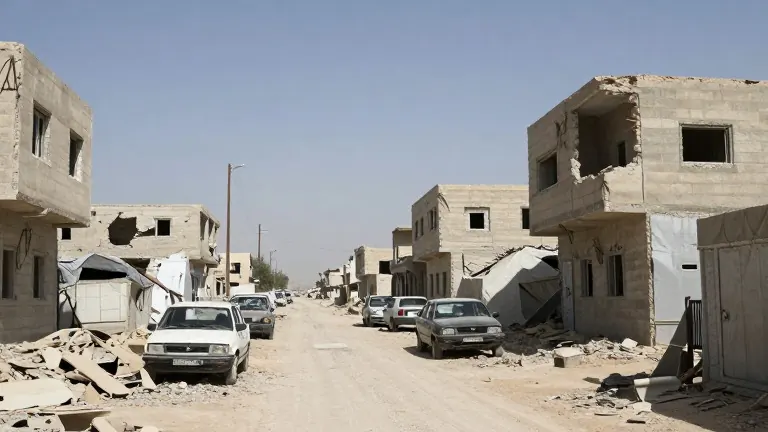
Salem also doubts that reconstruction will begin soon. More than 80 percent of buildings in Gaza are damaged, with about two-thirds completely destroyed. "I think reconstruction will be difficult. They do not want to give others any rights," he stated. He describes a daily existence where people live day by day, having already faced the worst of their fears.
Hanan Abu al-Maaza, 57, has been displaced more than 12 times during the war. She fears the next government could bring even more suffering. "We go to sleep without feeling safe, wondering what they might do to us next," she said. She hopes a new leader will allow her to return to her home in Beit Lahiya and provide a sense of safety.
Manar Owaida, 23, is displaced in the Tal al-Hawa neighborhood of Gaza City. She expects the same policy of killing and destruction to continue regardless of who wins. "Israel's policy is one of crime, killing and destruction. Since 1948, it has been the same policy," Owaida said. Her greatest concern is that Netanyahu might launch a wider regional war to avoid domestic political pressure around the vote.
Mousa Ali, 33, is in Gaza City with his four children. He believes the election outcome will determine whether displaced Palestinians can return to areas beyond the Yellow Line. "Every day in Gaza, there is blood, there are people being killed, and there is bombing everywhere," Ali said. He hopes the opposition will perform well, particularly Arab parties, to create a government that stops the ongoing bloodshed.
The next government will inherit a territory where residents feel the war is endless. Whether the winner is Netanyahu or Eisenkot, Gazans say they are waiting with fear, uncertainty, and a small amount of hope for a less harsh administration.
The election takes place on Tuesday, with results expected to shape the strategic direction of the Israeli military and its control over the remaining portions of the Gaza Strip.
Source: Al Jazeera