Canadian confirmed among 69 killed in Spanish train collision
Spanish officials have identified a Canadian among the victims of the Oct. 28 collision, as the government faces renewed scrutiny over rail safety.
By Pablo Montgomery ·
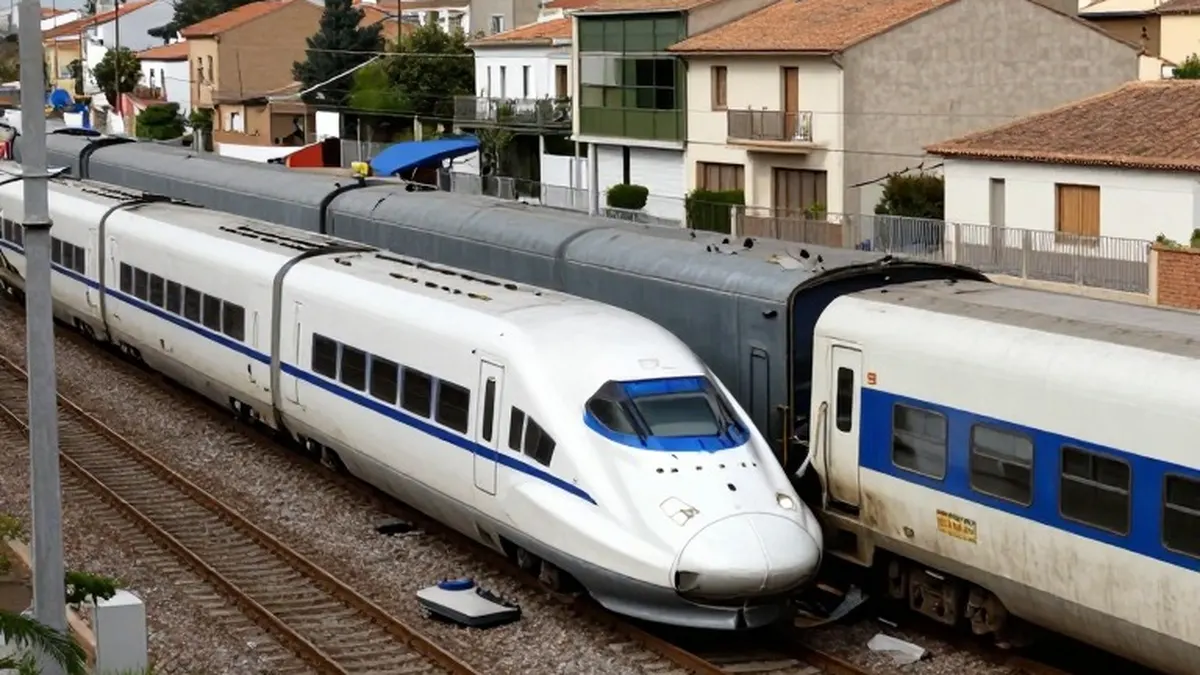
A Canadian was among the 69 people killed when two high-speed trains collided near Urda in central Spain on Oct. 28, Spanish officials have confirmed. The crash was the second major fatal accident this year involving the same rail companies on the same line.
The Tribunal Superior de Justicia de Castilla La Mancha released details about the victims on Sunday after Spain's Center for Integrated Data completed their identification. Those killed included 54 Spaniards and citizens of Canada, France, the United States, Japan, Argentina, Mexico, Tunisia, Portugal and the Czech Republic.
Global Affairs Canada told CBC News last week that it knew of six Canadians injured in the collision and one person whose whereabouts were unaccounted for. It declined to provide further details, citing privacy considerations. The department did not immediately answer a subsequent request for updated information following the Spanish officials' announcement.
The two trains carried a combined 526 passengers and 12 crew members. The collision in Toledo followed a January crash that killed 46 people, bringing safety and maintenance concerns back into debate on Spain's high-speed rail network. The country's network is the most extensive in Europe.
Transport Minister Óscar Puente said the sequence leading to the collision began when an automatic-signalling system failed, causing several trains to stop automatically. The central control centre in Madrid then assumed control. According to Puente, a train run by the state-owned operator Renfe received permission to continue despite an Iryo-operated train being stationary ahead of it.
Opposition parties have called for Puente to resign, but he has so far resisted those demands. Prime Minister Pedro Sánchez travelled to the crash site late last week and promised an investigation into the collision. He also pledged improvements aimed at preventing another tragedy.
The disaster comes during a campaign in which Sánchez and his Socialists are seeking to remain in power. With an election scheduled for Nov. 29, the government is now confronting renewed debate over the rail system alongside the political pressures it already faced before the collision.
Those pressures include public dissatisfaction with housing costs and high rents, as well as corruption allegations. Right-wing parties have also criticized the government's migration policies, which are liberal compared with those of other European countries.
Source: CBC News