Breaking: Election Day is here! Make your selections: The world watches as the U.S. decides its direction
Voters across the United States are casting ballots to determine the balance of power in Congress, with global markets and geopolitical allies closely monitoring the outcome.
By Pablo Montgomery ·
Voters across the United States are heading to the polls on Tuesday, November 3, 2026, to decide the outcome of the midterm elections. This contest marks the halfway point of President Donald Trump's second term and will determine which party controls Congress for the final two years of his presidency. For readers outside the United States, the structure of this election involves three distinct levels of government. The House of Representatives, with all 435 seats up for grabs, handles the budget and initiates tax legislation. The Senate, where 35 seats are contested, confirms judges and treaties and holds oversight powers. State governors, with 36 races on the ballot, manage state budgets and can influence national policy through their states' resources.
The stakes of this vote extend far beyond American borders. According to Reuters, Wall Street is watching for more than just the control of Congress. The results could add to investor concerns regarding artificial intelligence spending and debt ceiling negotiations. Global markets are sensitive to the political stability of the world's largest economy. A shift in power could alter the trajectory of trade and tariff policies that have impacted supply chains worldwide. Allies and adversaries alike are monitoring the process to gauge the future of American foreign policy commitments.
The Associated Press describes the election as a referendum on Trump's second term. Voters are reportedly struggling with high prices and are angry over an unpopular war with Iran. Recent polling from the AP and NORC indicates that 35 percent of U.S. adults approve of Trump's job performance, while 25 percent approve of his handling of the economy. About seven in ten respondents say the country is heading in the wrong direction. Most of these voters blame the president for the high cost of living. This sentiment is driving the turnout and the intensity of the campaigns across the nation.
In the House of Representatives, Republicans currently hold 218 seats, while Democrats hold 214, with one independent and some vacancies. Democrats need a net gain of three districts to secure a majority, while Republicans can lose no more than two seats to maintain their control. Ballotpedia counts 46 battleground districts that could determine the final outcome. In the Senate, Republicans hold 53 seats and Democrats hold 45, with two independents who caucus with the Democrats. Democrats need a net gain of four seats to take control of the chamber. Republicans can only afford to lose two seats to keep their majority. Eleven senators are not running again, creating open seats that are often more competitive than races with incumbents.
The governor races are also critical for the global perspective. Republicans hold 26 governorships and Democrats hold 24. Of the 36 offices on the ballot, each party holds 18. Nineteen of these races do not have an incumbent on the ballot, which often leads to less predictable results. Democrats would need a net gain of two governorships to achieve a nationwide majority, a feat they have not accomplished since 2010. Several states, including California, Florida, and Texas, are using new congressional maps following mid-decade redistricting. These new boundaries may change the demographic makeup of districts and influence how voters align with national parties.
Key Senate battlegrounds include Georgia, where Senator Jon Ossoff faces Republican Representative Mike Collins. In North Carolina, former Governor Roy Cooper is challenging former Republican National Committee chair Michael Whatley. The AP notes that these races are closely watched because they could tip the balance of the Senate. In Michigan, Republican former Representative Mike Rogers is competing against Democrat Abdul El-Sayed. The AP says economic strain and tariffs have made this state competitive. In Texas, Republican Attorney General Ken Paxton is facing Democrat James Talarico. The Trump administration backed Paxton over Senator John Cornyn in the primary, highlighting the internal dynamics of the Republican party.
The mood among voters is shaped by economic anxiety and foreign policy frustrations. More than 57 million people had already voted as of Monday, surpassing the early vote of four years ago in many closely watched states. This high level of early participation suggests a strong interest in the outcome. Republicans are bracing to lose the House and are fighting hard to hold the Senate. The AP notes that one or two seats could tip either chamber. Democrats are described as cautiously optimistic, relying on the anger of voters over the cost of living to drive their candidates to victory.
President Trump has been active in campaigning, holding dozens of rallies to support Republican candidates. He ended his schedule on Sunday in Salina, Kansas, where he told voters, "I really want you to pretend I'm on the ballot." His schedule included stops in Mississippi, South Carolina, and Texas. However, many Republican candidates have kept their distance from the president, reflecting the complex relationship between the party and its leader. Trump has also continued to make claims about voting fraud, including that noncitizens vote in large numbers. His administration has sued in Alaska and California, and Democrats fear interference and intimidation as the Justice Department threatens to prosecute local election officials.
Money is playing a significant role in this election cycle. The 2026 elections are likely to be the most expensive in history. Republican committees have outraised and outspent Democratic committees, helped by Trump-affiliated groups and Elon Musk. However, at the candidate level, Democrats have outraised their opponents. An analysis of AdImpact data by the AP shows that 88.1 percent of Republican general election TV ad spending went to states and districts Trump won in 2024. This includes more than 850 million dollars spent in areas where he won by 10 points or more. This strategy reflects the Republican focus on consolidating support in friendly areas while also investing in competitive districts.
Quotes from party leaders highlight the strategies of both sides. RNC Chairman Joe Gruters said, "Everything depends on turnout. If we turn out our voters, we win, and that's what we've been planning for." DCCC Chair Rep. Suzan DelBene stated, "The American people are angry. They want change." These statements underscore the different approaches to mobilizing voters. The outcome of this election will have immediate implications for the U.S. political landscape and long-term effects on global relations. A strong Democratic night would boost potential 2028 candidates and could complicate the path of Vice President JD Vance.
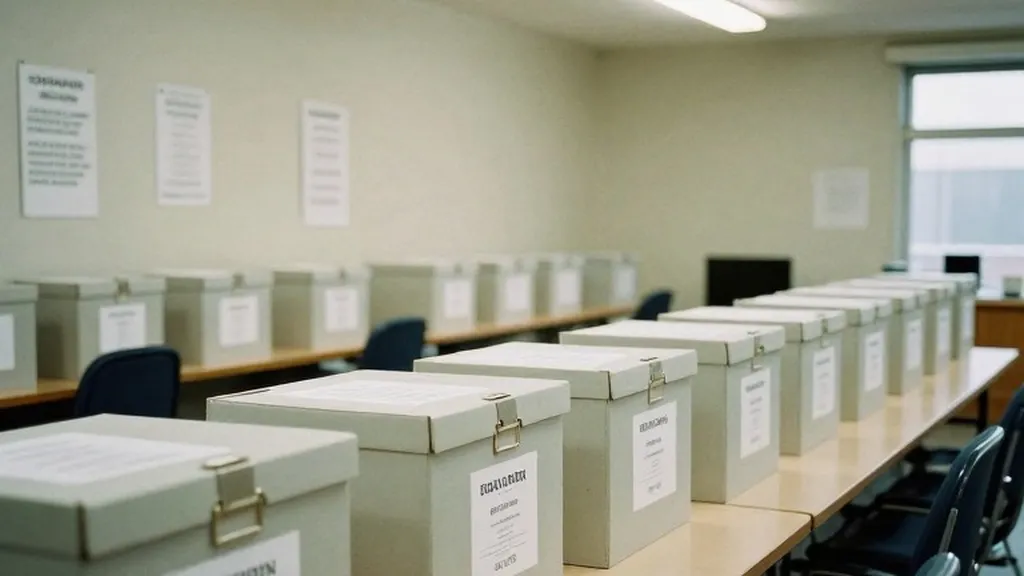
Voters should know how to participate in the process today. You can find your polling place at vote.gov or your state election office. It is important to check your state's ID rules before going, as they vary by location. Poll hours differ across the states. For example, in California, polls are open from 7 a.m. to 8 p.m., and the state largely uses mail voting. In New York, polls are open from 6 a.m. to 9 p.m. In Texas, polls are open from 7 a.m. to 7 p.m. In Florida, polls are open from 7 a.m. to 7 p.m. in both Eastern and Central zones. In states like Hawaii and Oregon, most voters cast ballots by mail. Anyone in line when polls close is entitled to vote, so it is important to arrive early if you expect a long wait.