Iraqi Politics: Probe Launched After Maysan Threatens Road Blockade
Prime Minister Ali al-Zaidi ordered an investigation into the Maysan council chief following a 72-hour deadline to reopen the Iran border crossing.
By Marta Price ·
Iraqi Prime Minister Ali al-Zaidi ordered an investigation on Monday into Mustafa Daeer Mohammedawi, the head of the Maysan provincial council. The probe follows Mohammedawi's warning that the province would resort to civil disobedience if the Sheeb border crossing with Iran remained closed by Thursday.
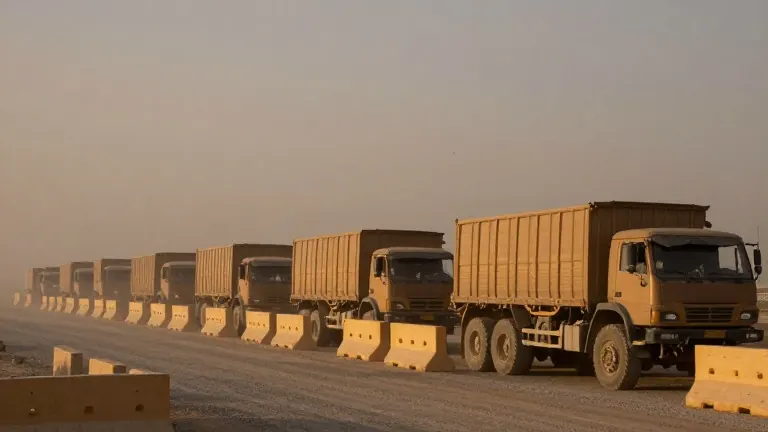
On Sunday, Mohammedawi stated that the people of Maysan would be forced to block all roads connecting the province to the rest of the country if the crossing did not reopen. He described the potential closure as a severing of the province's link to the national network. The Sheeb crossing, known as Chazabeh in Iran, serves as a major commercial corridor between the two nations.
Baghdad closed the crossing on Wednesday, citing deficiencies in technical and logistical infrastructure. Haidar al-Aboudi, the government spokesperson, said the site lacked necessary technological preparations. An Iraqi border official told Reuters that the shutdown allows authorities to review security arrangements and install detection equipment to prevent the smuggling of prohibited materials. Abdul Amir Hassan Ali al-Taiban, an adviser to the prime minister, claimed that drugs and currency were entering southern Iraq through Iranian crossings, pointing to uncontrolled groups as the cause.
Iran’s embassy in Baghdad rejected these allegations on Saturday, labeling them false. The embassy urged Iraqi authorities to manage statements that could damage bilateral relations. In Maysan, a Shiite-majority province where the capital Amarah acts as a commercial hub, truck drivers and protesters gathered near the closed crossing. Lawmaker Mohammed Jassim al-Khafaji questioned the legal basis for Zaidi’s investigation, arguing that only the provincial council can remove its chairman by majority vote.
The border dispute coincides with renewed street protests in Baghdad. Demonstrators gathered on October 25 to mark the anniversary of the Tishreen movement, which began in 2019. Participants waved Iraqi flags and called for political and economic reforms, opposing the muhasasa system of sectarian quotas. The protests are driven largely by young Shiite Iraqis frustrated by corruption, unemployment, and the influence of political factions.
Rights organizations reported that more than 600 protesters were killed during the original movement, with about 20,000 injured and 3,000 arrested. The Badr Organization, an Iranian-backed group, was among those accused of suppressing the initial protests. Hadi al-Amiri, leader of the Badr Organization, recently described the protests as sedition at an event in late August.
Muntadhar al-Zaidi, an activist and journalist, called for justice over the killings and criticized the concentration of political power. The National House party, linked to the Tishreen movement, demanded peaceful demonstrations and the placement of weapons under state control. The Islamic Resistance in Iraq, an umbrella of pro-Iran armed groups, accused the government of yielding to Washington regarding border crossings and flights involving Iran.
Source: The Jerusalem Post
More Politics · World news · Report a business · Got a Story?