Student List rallies in Belgrade ahead of critical Serbian vote
Polls suggest the opposition bloc may capture over 40 percent of the vote, threatening the 14-year hold of the Serbian Progressive Party.
By Kofi Greco ·
Serbian voters cast ballots on Sunday in a parliamentary election that marks a sharp break from the political stability of the past decade and a half. The contest pits the incumbent Serbian Progressive Party (SNS) against the Student List, a coalition formed by a student movement that has protested the government for nearly two years.
The path to this election began in November 2024 when a concrete canopy collapsed at the Novi Sad railway station, killing 16 people. Student organizers framed the disaster as a symbol of institutional failure and used the subsequent protests to challenge corruption and demand accountability. By October 2026, the movement had expanded its base to include candidates from various professional backgrounds, aiming to bridge ideological and foreign policy divides that have traditionally segmented Serbian politics.
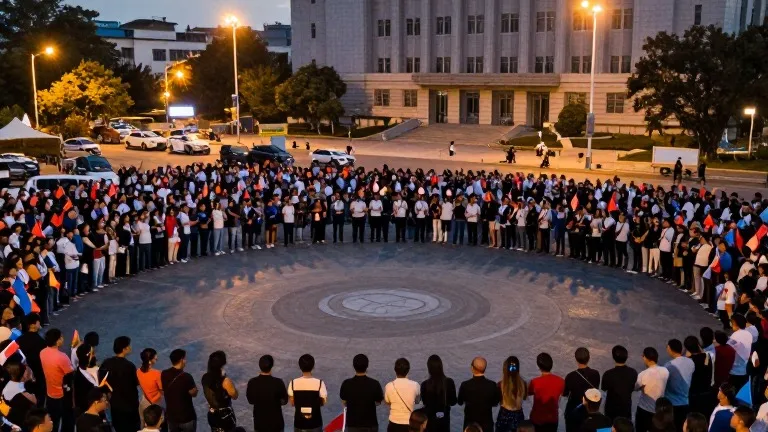
In the final days before voting, thousands gathered in Belgrade for the Student List's closing rally on Thursday evening. Many attendees had walked to the capital from other regions to demonstrate solidarity. Biology student Arsa Stojanovic told the crowd that the walkers had traversed the country and confirmed public support. Aleksandar Cupic, a transport engineering professor and candidate, described the atmosphere as smelling like freedom. The event concluded with a kolo, a traditional circle dance.
Polling data cited by political scientist Dusan Spasojevic indicates the Student List could win more than 40 percent of the vote. Spasojevic noted that this is the first competitive election since Aleksandar Vucic took power in 2012, with an uncertain outcome. In contrast, the SNS held its own rally nearby, arguing that a vote for the party ensures stability and prosperity. Former President Vucic accused opponents of acting on foreign orders and claimed the party faced financial attacks from rivals.
The campaign was marked by tensions and accusations of imbalance. The independent monitoring group CRTA recorded 116 incidents of violence or threats by the final week. The group reported that almost three-quarters of national television airtime went to government representatives, while over 80 percent of Student List coverage was negative. CRTA also noted surveillance of opposition activists and slow police response to their concerns. Anonymous sources told reporters that voters were sometimes offered between 30 and 150 euros, or family holiday packages, to support the SNS.
Authorities have warned of potential street violence following the vote, alleging that foreign intelligence services aid the students. Several individuals were arrested on suspicion of plotting disturbances for election night. Spasojevic said a decisive victory for either side would be preferable, but he expects a narrow margin. He added that a close SNS win would likely be contested, as the Student List has pledged to defend every vote.
The European Union is watching the process closely. An EU Commission spokesperson stated that key recommendations on Serbia's electoral framework remain unimplemented. The spokesperson emphasized that democracy and the rule of law are central to Serbia's accession process, a status the country has held since 2012.
Source: Deutsche Welle
More Business · World news · Rip-Off Report · Report a business · Got a Story?