Ice Blocks Russian Tankers on Northern Sea Route
Vilkitsky Strait congestion forces diversions for sanctioned vessels, challenging Kremlin claims of an open Arctic passage to Asia.
By Marta Price ·
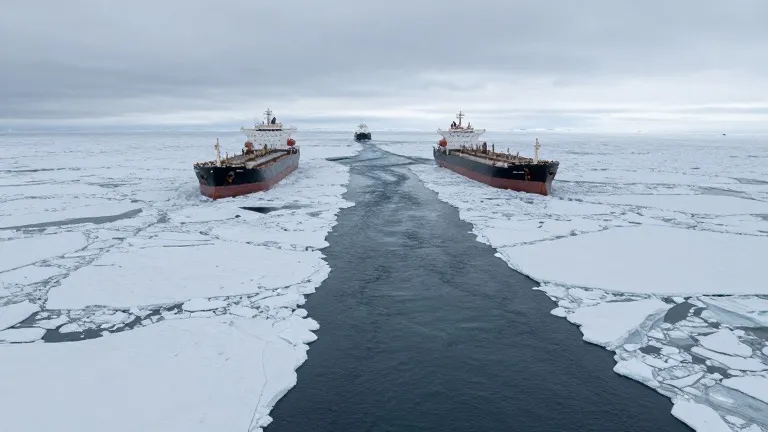
Russian tankers stalled in the Vilkitsky Strait this July, exposing a physical bottleneck in the Northern Sea Route. The strait, a 55-kilometer corridor between the Siberian coast and Bolshevik Island, jammed with ice, trapping a group of sanctioned vessels far above the Arctic Circle. Icebreakers were days away, and only one tanker successfully navigated the passage. The rest waited for up to two weeks before abandoning the direct path to China.
The incident contradicts the Kremlin's narrative of a newly accessible Arctic corridor. Moscow promotes the route as a safe alternative to European waters, shielding cargo from drone strikes and naval interception. President Vladimir Putin described the Northern Sea Route as a reliable path to major markets. Speaking in September during the launch of the Vostok Oil project, he claimed 37 million tons of cargo moved along parts of the route in 2025. He predicted this volume would nearly double by 2030, a target that exceeds the 80 million tons goal set in 2019.
Independent data presents a more restrained picture of current capacity. The Norway-funded Center for High North Logistics reported that Russia shipped approximately 2 million tons of crude oil, or 15 million barrels, along the full route to Asia by late September. By mid-October, traders and shipping data indicated the total had reached 20 million barrels. This figure represents a 50 percent increase from 2025, yet it accounts for only about 1 percent of Russia's total seaborne oil exports. Tomas Alexa of Ambrey characterized the growth as a surge from a low baseline.
Western sanctions complicate Russia's ability to expand its Arctic fleet. Alexa noted that restrictions hinder the construction and maintenance of ice-capable ships. Spare parts and materials must now move through third parties, and repair services previously provided by Norwegian, Danish, and Dutch firms are no longer available to Russian operators. This logistical friction slows the modernization of the shadow fleet that relies on the Northern Sea Route.
The route is attracting interest beyond Russian state actors. On October 22, South Korea confirmed its first container ship had completed a voyage on the Northern Sea Route. Officials called the path a shortcut to Europe but acknowledged difficulties, including large ice floes in the Bering and Vilkitsky straits. China also established a scheduled container service to Europe this year, completing multiple trips. These developments test the route's viability for commercial logistics rather than just energy exports.
Catherine Sendak of the Center for European Policy Analysis raised questions about governance and access. She noted that Russia treats much of the Arctic as an inner waterway, leaving commercial vessels uncertain about tolls and service levels. Sendak suggested Moscow might restrict access to other nations if it cannot define clear rules. Security dynamics are shifting as well. EU Foreign Affairs Chief Kaja Kallas described the region as a front line of global power competition on October 21. NATO launched the Arctic Sentry mission in February, and the United States announced plans in September to expand its military presence in Greenland.
Environmental risks accompany the increased traffic. Ksenia Vakhrusheva of Bellona explained that melting ice can pack tightly in narrow straits, blocking ships that lack ice classes. She warned that oil degrades slowly in cold temperatures and can spread across ice sheets, accelerating climate effects. Russia currently publishes no data on incidents along the route, and the remoteness of the area prevents independent groups from monitoring operations.
Source: RFE/RL
More Business · World news · Rip-Off Report · Report a business · Got a Story?