Besieged West Bank town fortifies its school against settler violence
In al-Mughayyir, where five teenage students were killed last academic year, teachers have turned the secondary school into a fortress as residents warn of a widening campaign to displace Palestinians.
By Marta Price ·
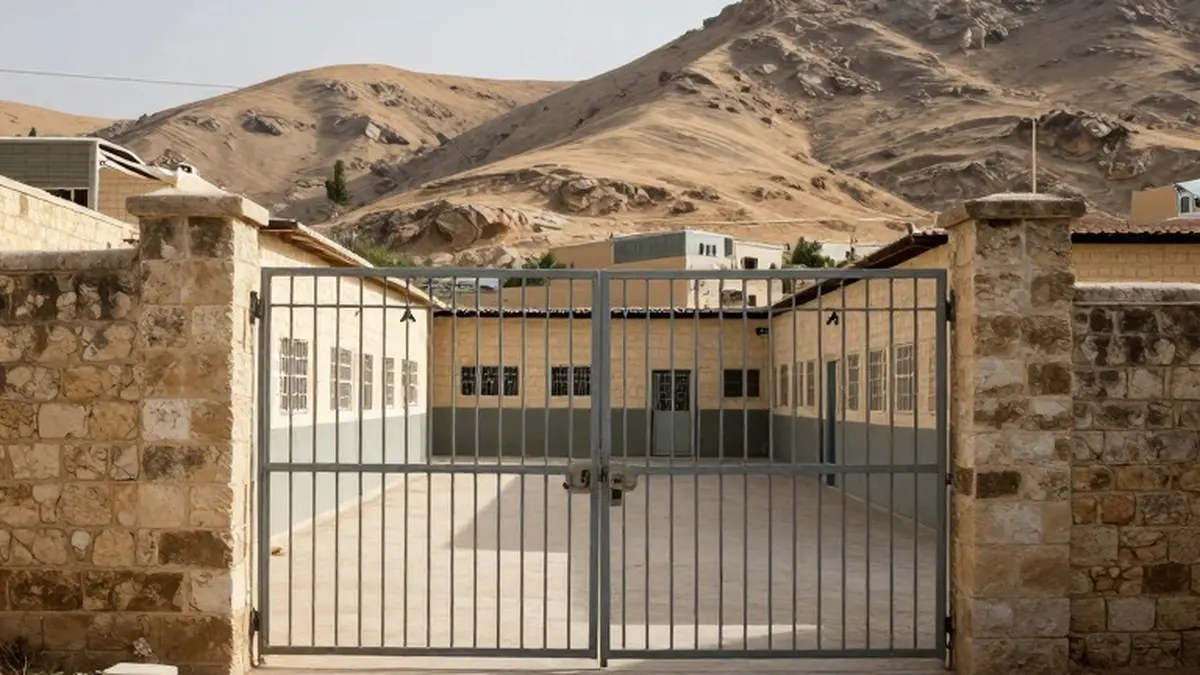
Parents in al-Mughayyir, an occupied West Bank town of about 3,000 people northeast of Ramallah, had to be persuaded to send their children back to school this year. Israeli settlers killed five teenage students last academic year, one of them at the school gates. To reassure families, teachers at the public secondary school gave parents a tour of defences they had built over the summer break.
Metal fences now tower over the schoolyard walls, a sturdy metal gate has replaced the door, and a new wall shields classrooms from a hilltop where, last academic year, a settler shot dead two people, including a student.
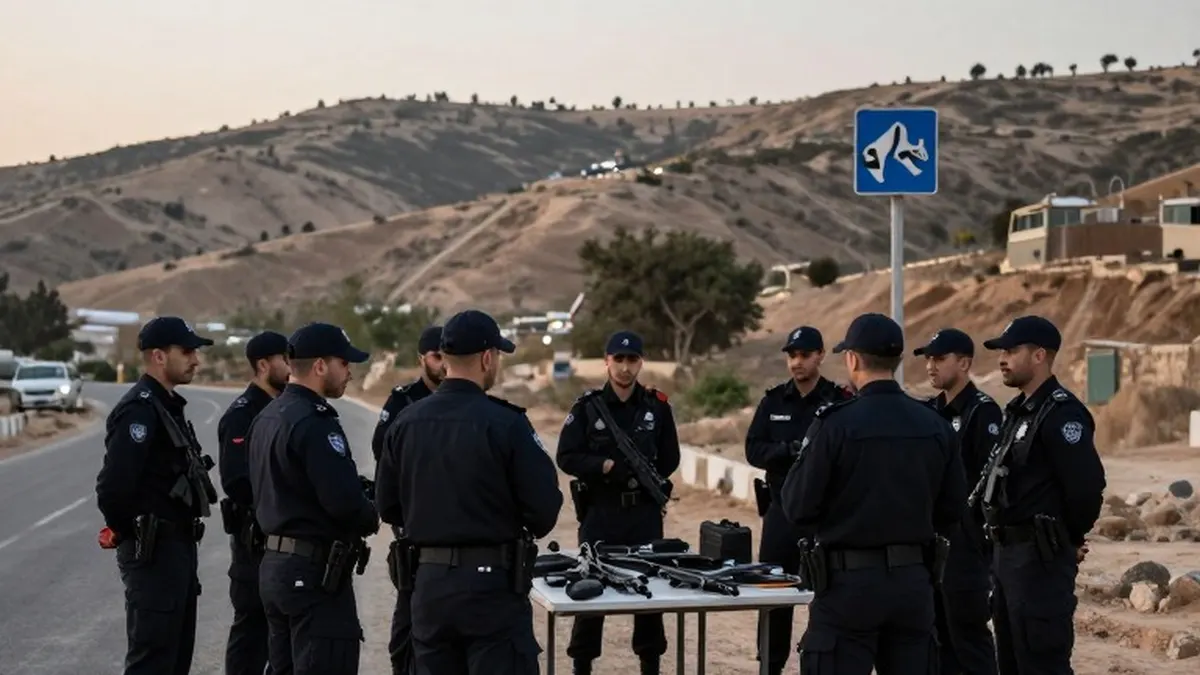
Armed settlers regularly raid the town, assaulting residents, attacking homes and seizing livestock, while Israeli soldiers man checkpoints that block entry and exit for hours at a time. A lone soldier at the entrance decides who comes and goes. Most shops stay shuttered even on weekdays. The school sits isolated at the village's edge, and residents say settlers stage their raids around it under the military's watch.
Residents see the violence as part of a wider project to displace Palestinians. 'When the settlers began their attacks, they began in the Jordan valley area, displacing communities of farmers consisting of 10, 20 people. Now, they are trying to displace entire villages,' said Ameen Abu Alia, the town's 54-year-old mayor. Settler outposts near the town have multiplied from one in 2023 to 12, and in January settlers drove the last residents from Ras 'Ein al-'Auja in the south Jordan valley after a similar campaign.
The violence has repeatedly turned deadly. In 2024, Waheed Abu Naim, a 37-year-old schoolteacher, rushed to defend a home under attack. A settler pressed a pistol to his chest and pulled the trigger, but the gun was out of bullets. In early September, Omar al-Nassan, 19, and Khalil Abu Alia, 16, were killed by settlers and Israeli soldiers as they tried to stop settlers taking their sheep, Abu Alia said. The Israeli military said it entered the village to provide security for an Israeli civilian and police retrieving livestock, and that it fired on 'key instigators' after Palestinians threw stones.
Although settlements are considered illegal under international law, Israel's government has taken few steps beyond condemnations to rein in settler violence, and extremist ministers in the Netanyahu government have equipped settlers with guns and vehicles. The Israeli rights group Yesh Din recorded more than 170 settler attacks from the start of the olive harvest at the end of September. Al-Mughayyir's groves lie unpicked despite the season's first rains: villagers need prior military approval to harvest, and soldiers close the only entry for hours a day, several times a week. Three families have already left. 'Someone who has no money is now forced to sell part of their flock, and end their involvement in farming and search for other work,' Abu Alia said.
At the secondary school, teachers have drawn up emergency plans for settler attacks and added lessons on avoiding confrontations to the curriculum. 'The school's aim is that when the children enter the school, and when they go home, they are protected,' said Bassam Abu Assaf, the 54-year-old principal. 'The amount of time we spend sitting is almost nonexistent. Our eyes are outside the school.'
Classes remain badly disrupted. About 80% of staff live outside the village and are often stopped at the checkpoint, so school runs only three days a week and ends early, ahead of the usual afternoon closure. Israeli troops once fired teargas near the school and the fumes blew into classrooms. 'You try as much as possible to make the student concentrate with you,' Abu Naim said, but 'the educational gap becomes very large' with so many days when students cannot focus. His own brother was killed last April in a settler attack outside the school.
Abu Assaf, who attended the school he now heads, remembers a different childhood in the surrounding hills. 'We could walk around, coming and going. Everything was open.. Now, the kids are stuck in their homes, seeing the world through their phones,' he said. For Abu Naim, the classroom is a form of resistance: 'There is a plan of displacement. But we will raise another educated generation regardless. Our aim is to confront these attacks through education.'
Source: The Guardian