Ocean realism: New Blue Planet series retains murky water to verify footage
BBC executives confirm that no AI-generated frames were used in the production, a move designed to reassure viewers about the authenticity of the footage.
By Pablo Montgomery ·
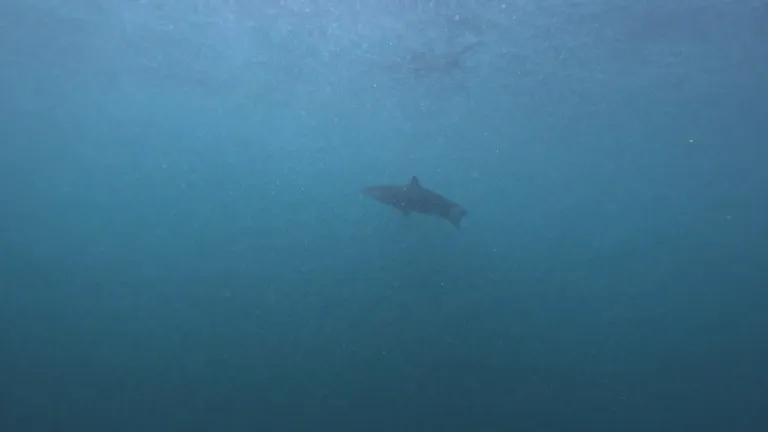
Viewers of the upcoming BBC nature documentary can expect to see cloudier water and visible equipment in the final cut. The production team intentionally preserved these imperfect elements to demonstrate that the visuals are captured on camera rather than generated by artificial intelligence. This approach aims to build trust with an audience increasingly familiar with digital synthesis.
Executive producer Elizabeth White explained that the rise of AI tools has prompted the team to adopt a more organic visual style. She noted that deep-sea creatures are often more striking than digital models could create. White stated that the animals filmed are completely real and likely surpass what AI could imagine.
Jack Bootle, head of specialist factual commissioning at the BBC, offered a specific assurance to journalists during a press screening. He confirmed that no generative AI was used in the series and that not a single frame was synthetic. He described the production as part of a golden age of natural history making that features novel animal behavior.
The new series, narrated by David Attenborough, arrives nearly a decade after the second installment and 25 years after the original. The production promises advanced technology, including the world's first underwater CCTV camera, which the team nicknamed the stonefish cam. Producer Yoland Bosiger developed this technology to capture specific animal interactions.
Filming took four years across five oceans. The crew utilized leg-mounted scooters for immersive diving shots and lasers to film deep-sea animals. They also built a mini-dome camera to follow an octopus and a deep-sea selfie stick. These tools allowed the team to record unusual behaviors, such as dolphins using sea sponges to trap fish and crabs lining up in formation to feed.
The series also addresses environmental threats. One episode examines how warmer seas are killing sea anemones, forcing clownfish to repair their homes. Another segment continues the focus on plastic pollution by exploring forever chemicals. White said the production saved money by employing more local crews on location than previous series did.
Blue Planet III will premiere on BBC1 and iPlayer on Sunday, 1 November.
Source: The Guardian