US midterms could reshape Trump's Iran war calculus, analysts say
A Republican loss in Congress would raise pressure on President Donald Trump over the war in Iran, but experts say it would not necessarily prevent new military action.
By Marta Price ·
The Republican Party enters Tuesday's midterm elections with the Trump administration unable to either win or diplomatically resolve the war in Iran. A Democratic takeover of Congress would force the White House to navigate a very different political landscape for the rest of Trump's second term, but the course of the war is not decided only in Washington or Tehran. DW spoke with Omid Memarian of DAWN, a Washington-based think tank focused on reforming US Middle East policy, Finland-based political scientist Leila Morovati, and Babak Rezaeedaryakenari, a professor of international relations at Leiden University in the Netherlands, about the factors that could tip the balance toward war or peace.
Memarian said a Democratic victory would push Trump to concentrate more on domestic issues and would likely expose the financial costs of the war in Congress. Still, Trump could continue limited strikes on Iran without formally declaring war. Memarian expects the president to seek an exit that "saves face" after Tuesday's vote, and said Iran is engaged in a "big gamble with someone who does not behave like a conventional politician," which raises the risk of renewed attacks. Rezaeedaryakenari made a similar point: "The president has broad authority and freedom of action, especially in foreign policy and the conduct of military operations. A Republican defeat, even with increased pressure from Congress, doesn't necessarily stop new attacks."
Israel's October 27 election ended in deadlock, with neither the coalition around Prime Minister Benjamin Netanyahu nor the camp backing former military chief Gadi Eisenkot securing an outright majority. Memarian said the uncertainty could push Netanyahu to act on major decisions while he still holds power, calling the transition period the "most fragile and dangerous" for renewed escalation. A change of government would not fundamentally alter Israel's Iran policy, he said, though Eisenkot "may be more deferential to America" and coordinate more closely with Washington. Even so, Eisenkot "certainly won't be like Netanyahu, who could sell any plan or scenario to Trump." Rezaeedaryakenari said Israel's security concerns about Iran "are not limited to Netanyahu himself," noting that a new government could change the timing of a confrontation and coordination with Washington.
Iran's nuclear program remains the biggest open dispute, with the US rejecting Tehran's position that the program is meant only for civilian use. The two sides also disagree on how talks should be structured. "The US wants negotiations to start not only with a focus on Iran's nuclear program, but with concessions right at the outset," Memarian said, while Iran demands the lifting of sanctions and the release of frozen assets before nuclear talks begin. Until the sides agree on an agenda, he warned, they are likely to keep "climbing the ladder of tension." Morovati called the program "the crux" of the standoff: Tehran sees it as a survival guarantee and bargaining chip, while Washington fears a nuclear Iran would upend its security calculations and long-term strategy for the Middle East and beyond.
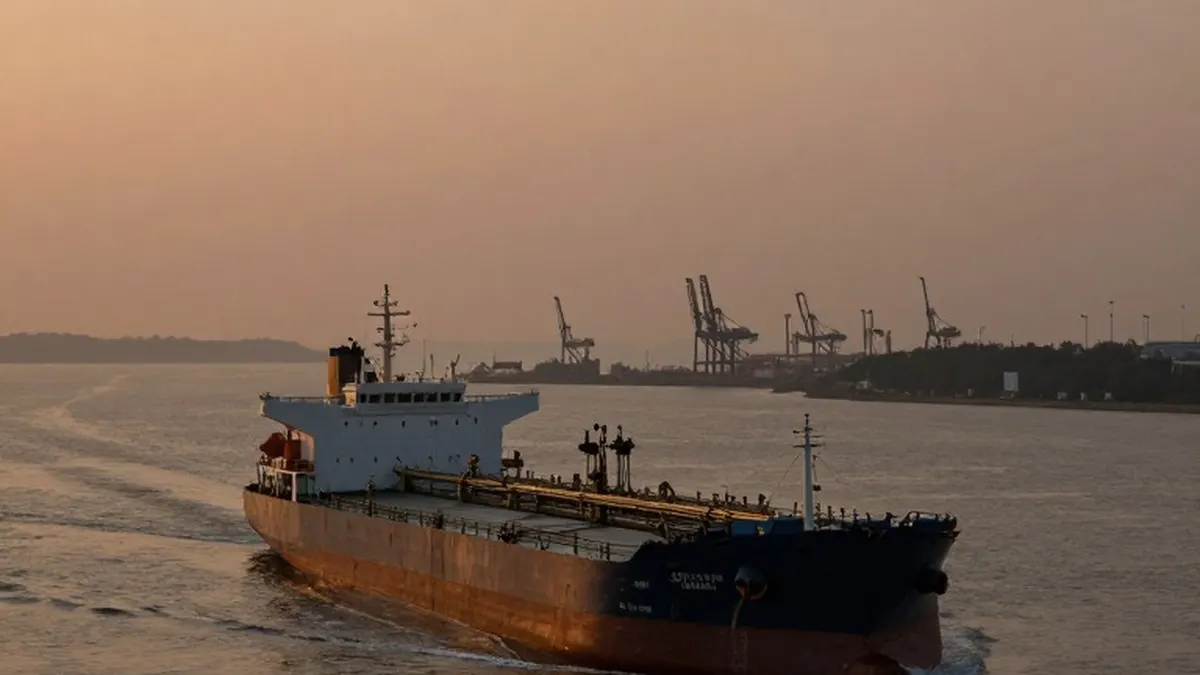
Before the United States and Israel launched the war in late February, about 20 percent of the world's oil passed through the Strait of Hormuz. Iran has since drastically cut energy exports through the naval chokepoint, using it as leverage. Memarian said those restrictions will not trigger escalation on their own: if US officials decide a broader attack is needed to change Iran's calculations, any incident could serve as a pretext, and if Washington considers the risks too high, it may opt for an economic blockade while keeping negotiations on the table. In that case, "even occasional tensions in the Strait of Hormuz won't pull America into war," he said.
Yemen's Houthi rebels have also targeted energy exports on the Red Sea, including attacks on Saudi cities and infrastructure. Memarian said the rebels' roots and struggle are "entirely domestic and organic" despite their ideological closeness to Tehran, and described their actions as "pragmatic calculations" that do not necessarily translate into escalation between Iran and the United States, though Washington could still use them as a pretext to strike Iran. Rezaeedaryakenari offered a different emphasis, saying Houthi attacks on shipping and on countries in the region "can both widen the war and accelerate coalition-building against the Islamic Republic." Countries that do not want war with Tehran may turn to closer military cooperation to protect trade and security, which "could narrow the Islamic Republic's room for maneuver."
With direct talks between Iran and the United States stalled, attention has turned to Qatar, Oman, Pakistan and Saudi Arabia, each playing a different role but all holding a direct stake in ending the war. "They are close to the US, but also want to maintain ties with Iran and build regional alliances to prevent future conflicts," Memarian said. Morovati warned that Washington's failure to support its Arab allies during the war could eventually push them to reconsider their policies and turn to the United States' rivals.
During the campaign, Trump said he expected a deal with Iran soon after the midterm elections, while Reuters, citing three senior Iranian officials and an additional source, reported that Tehran has deliberately prolonged talks to weaken him politically. Memarian said Iran's leaders believe a Republican defeat would increase pressure on Trump to end the war, but stressed that Trump remains the key foreign policy decision maker and that congressional pressure is unlikely to be decisive. He called the present moment the "best opportunity" to end the standoff before Trump leaves office in January 2029. "Iran's leaders need to think about their endgame," he said, warning that Trump could launch a massive attack, inflict serious damage and then declare victory. Rezaeedaryakenari said "escalatory factors" would have the upper hand in the coming months and that the likelihood of military escalation is high, adding that Iran can only avert a new round of war through a fundamental policy shift and concessions its leaders would consider close to surrender, a retreat that would itself threaten the regime's survival.
High oil prices, shipping risks and economic strain are pressuring all sides as the war enters its ninth month. "The economy is the Achilles' heel of every party to this war," Morovati said, noting that energy supply and the expectations of the American public have proven influential, one of the problems the Trump administration faces. She added that Arab countries do not act as a united bloc toward Tehran: "If they come under severe security and economic pressure, they may take joint action, but so far that hasn't happened in practice." Memarian also sees the economic costs as an incentive for a deal, but said each side believes inflicting more pain on the other will strengthen its hand in future talks. "That can easily turn this into a war of attrition, and in recent months that has been the approach," he said, adding that neither side has yet reached the point where it sees compromise as unavoidable.
Source: Deutsche Welle