Kenya Ebola Outbreak: Second Death Confirmed Amid Regional Spread
A 65-year-old woman died after being quarantined with relatives of the first victim, while authorities in Uganda restrict transit for travelers from the Democratic Republic of Congo.
By Marta Price ·
Kenya confirmed its second death from Ebola on Friday, marking the first time the country has experienced an outbreak of the disease. The patient was a 65-year-old woman who had been placed in quarantine as a close relative of the first victim. Health officials reported that she developed symptoms on October 13 while already under observation.
The first fatality was a man who traveled from the Democratic Republic of Congo. He fell ill in September and received treatment at multiple hospitals in the DR Congo before arriving in Nairobi, where he died on October 5. Seven other individuals are currently receiving care at two isolation facilities. These patients include three other relatives of the first victim, three health workers, and one hospital cleaner.
The Kenyan health ministry stated that all current cases belong to a single cluster. Officials emphasized that there is no evidence of community spread at this time. This national outbreak follows a larger crisis in the DR Congo, where more than 4,000 people have died since cases were confirmed in May. The DR Congo has reported over 9,500 cases, making it the second most deadly Ebola outbreak on record.
The virus strain circulating in the region is the Bundibugyo species, which is relatively rare. No approved vaccine or treatment exists for this specific strain, though clinical trials are ongoing. The virus spreads through contact with infected bodily fluids such as blood or vomit. Symptoms can progress to organ failure, and some patients experience internal and external bleeding.
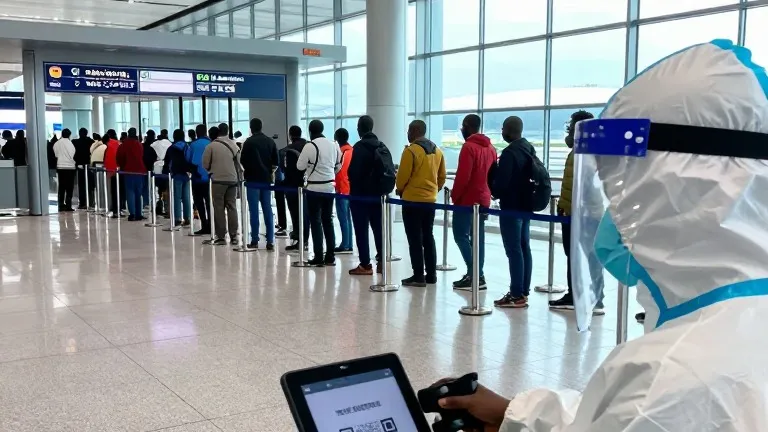
To manage the risk, Kenya has introduced enhanced screening for travelers arriving from the DR Congo and eight other high-risk nations, including Uganda, Tanzania, and Rwanda. Passengers must complete a digital surveillance form and present a QR code to port health officials upon landing. Aircraft from these countries also undergo additional public health screening. The International Rescue Committee, which is assisting both governments, notes that Kenya faces a steady risk of new cases crossing its borders.
The situation has prompted diplomatic and health responses across the continent. The United States has advised its citizens against traveling to Kenya, while neighboring Uganda, Ethiopia, and Somalia remain on alert. Uganda's health ministry announced on Friday that travelers who have recently visited the DR Congo can no longer transit through the country. This measure aims to prevent further spread as officials monitor movement in the region.
Nigeria’s health minister, Prof. Ali Pate, indicated that the country’s only confirmed Ebola case is genetically related to the strain identified in Kenya. He stated that there is currently no evidence linking the Kenyan patient to travel in Nigeria. However, further testing is underway to determine if the two patients crossed paths, as both are believed to have traveled through Uganda's Entebbe airport earlier this month.
Source: BBC News