German Union Escalates Strikes as Wage Dispute Deepens in Metal and Electrical Sectors
Germany's largest union has launched a widening wave of walkouts affecting major manufacturers, pressing demands for higher pay and job protections as cost-of-living protests spread across Europe.
By Pablo Montgomery ·
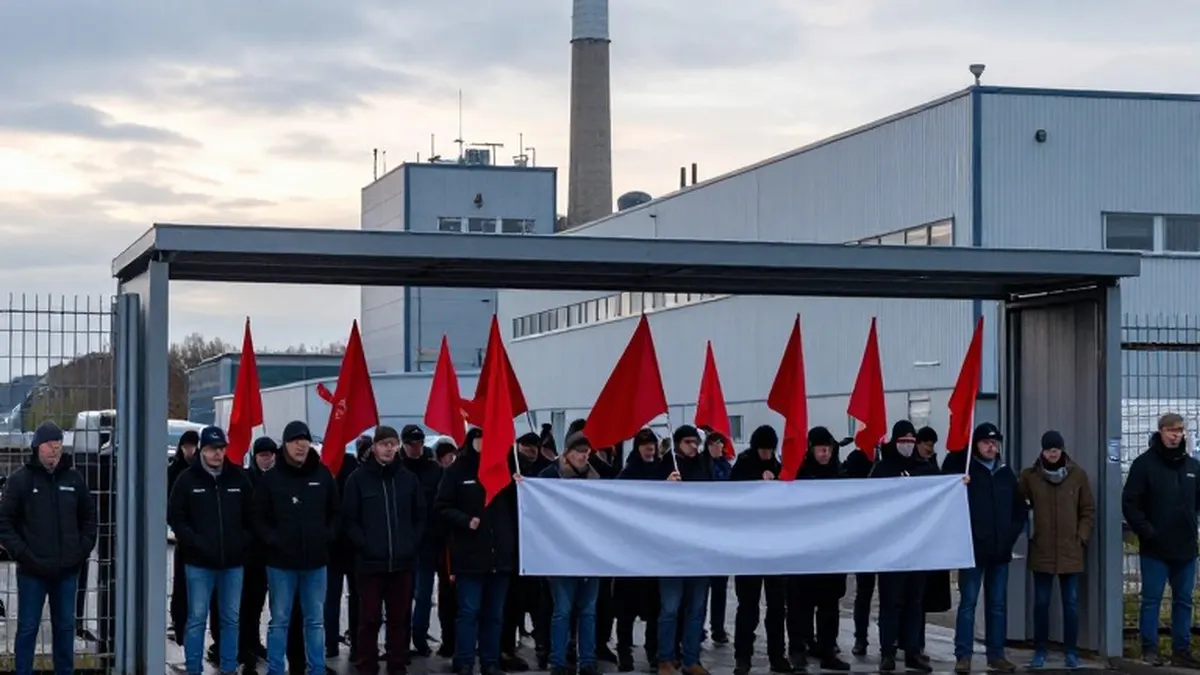
Germany's largest trade union has kicked off a broad wave of strikes as it presses employers for improved pay and stronger job security, intensifying a labor dispute that covers around 3.7 million workers in the country's metal and electrical engineering industries.
The walkouts began on Monday and mark a significant escalation in the wage standoff between the IG Metall union and employers. The industrial action lands at a time when strikes and demonstrations over living costs and conditions in workplaces and educational institutions are sweeping across Europe, some of them producing serious unrest.
Among the manufacturers hit by the stoppages are major names such as Audi, Mercedes-Benz and Tata Steel. The union is demanding a 5 percent pay increase to offset cost-of-living pressures, alongside safeguards for jobs and production sites and profit-sharing arrangements in industries that are performing well.
Employers have put forward an offer consisting of a one-off payment equal to 1 percent of pay in July 2027, followed by a 1.3 percent wage rise beginning in July 2028. Under the proposal, companies experiencing financial hardship would be permitted to skip the one-off payment.
IG Metall has dismissed the offer, arguing that it would effectively reduce workers' purchasing power, and responded by calling for the industrial action to be expanded further.
The strikes are set to run through the week, and the union intends to publish participation figures on Friday. In the previous bargaining round in 2024, turnout exceeded 100,000 workers on the busiest days, offering a measure of the scale the current action could reach.
The German dispute is unfolding against a wider backdrop of discontent across the continent. In recent weeks, rising living costs, housing expenses and education policy have driven people into the streets, with students and unions organizing mass rallies and unrest shaking countries including Belgium, France and Spain.
That wave of protest arrived in Germany over the weekend, when thousands of demonstrators gathered in Berlin and in more than 30 other German cities on Saturday, underscoring the breadth of public frustration as the union's strike campaign gets under way.
Source: Al Jazeera