French Public Life: Mass Mobilization Tests Government
Nationwide marches over education and policing have forced a significant deployment of security forces and raised questions about the stability of the current administration.
By Marta Price ·
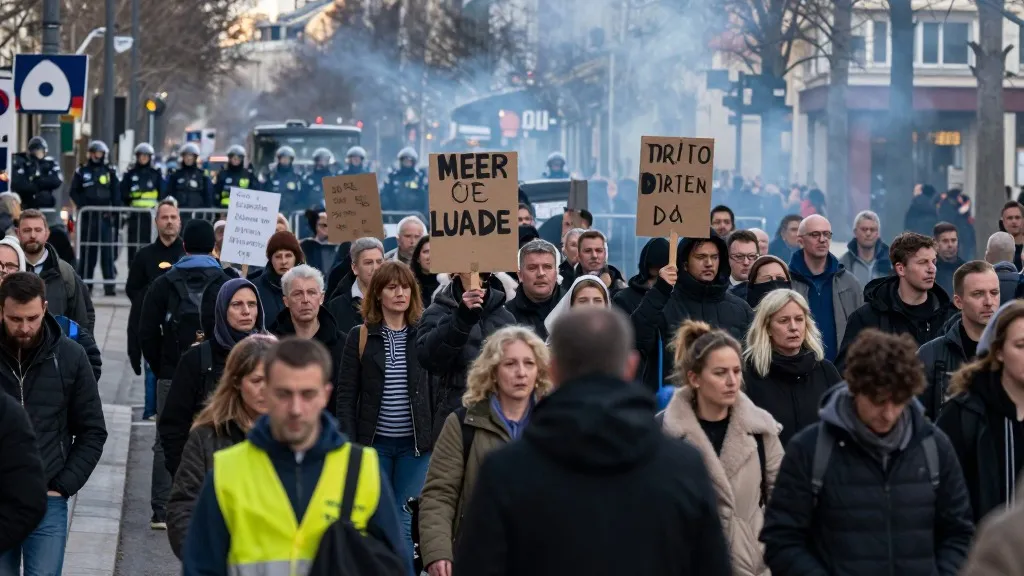
Residents in major French cities experienced a significant shift in the rhythm of their weekend on Saturday, as hundreds of thousands joined organized marches that largely remained peaceful but required extensive security measures. For many participants, the day offered a rare opportunity to publicly voice dissatisfaction with the cost of living and the management of local schools. The presence of families, including children and grandchildren, suggested a broadening of the movement beyond its initial student base, although the atmosphere remained tense in several key locations.
The central demand driving these demonstrations is a call for more teachers and urgent repairs to school infrastructure, which participants describe as dilapidated. In the capital, government estimates placed the crowd size at at least 110,000 people marching along the eastern edge of Paris. While the primary focus is on education, the protests have expanded to include widespread anger over heavy-handed policing tactics and the general financial strain on households. Marchers carried banners with slogans such as "Oppression breeds rebellion," signaling a growing frustration with the government's approach to public order.
President Emmanuel Macron faces a mounting social and political crisis as his term draws to a close. The administration has been criticized for banning non-union demonstrations it deems illegitimate and for restricting protesters from entering city centers. This strategy has drawn sharp contrasts with previous days of unrest, which saw some of the most violent scenes in years, including public buildings on fire and thousands of arrests. The current mobilization is the largest youth-led movement in years, with trade unions, teachers, and parents joining students who have been protesting since mid-September.
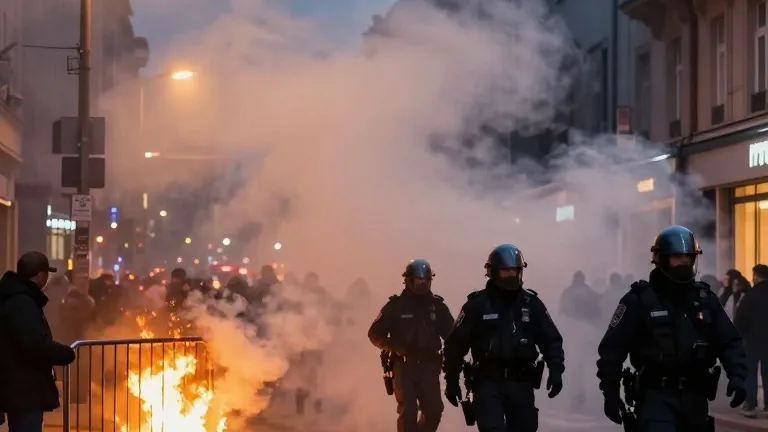
Despite the overall peaceful tone, tensions escalated at the end of the route in Paris near the Porte de Vincennes. Groups of masked men, who appeared distinct from the main crowd, threw glass bottles and stones at police lines. Officers responded with teargas, water cannons, and stun grenades, while a trash bin was set alight. Similar clashes occurred in other cities, including Lyon, Lille, Montpellier, Nantes, and Toulouse, where teargas was used to keep protesters away from downtown areas. In Marseille, bin fires were lit during confrontations, highlighting the ongoing volatility of the situation.
Security preparations for the day were extensive, reflecting government fears of a repeat of the previous week's violence. More than 70,000 police officers were deployed nationwide, and many museums and shops were closed or boarded up. While the government estimated the total number of marchers at 400,000, trade union leaders claimed the figure was double that. The scale of the mobilization has prompted calls for a more political resolution to the crisis rather than a purely police-led response.
Participants expressed a sense of urgency and a need for courage in the face of what they perceive as an increasingly authoritarian regime. One communications worker, who had been teargassed in the previous weekend's demonstrations, noted that people are afraid but determined to defend their legal right to protest. A university student from a blockaded science faculty in Paris described the feeling that the government is trying to suppress the democratic right to demonstrate in the street. These personal accounts underscore the deepening divide between the public and the state.
The movement has also drawn parallels to the gilets jaunes protests of 2018 and 2019, with some demonstrators wearing yellow vests. Jérôme Rodrigues, a prominent figure from that earlier movement, stated that the government is pushing demonstrators to the edges of cities, away from centers of power. He argued that police shields would not solve the financial struggles of the French people and predicted that demonstrations would continue every weekend. A retired banking consultant marching for his granddaughter cited the government's refusal to listen to public demands as the main reason for his participation.
In Orléans, the protests took on a political dimension as thousands marched against a congress hosted by the National Rally party. The crowd, which included anti-fascist slogans, targeted both the current administration and Marine Le Pen, who is considered a frontrunner in next year's presidential election. Chants calling for Macron to resign and for Le Pen to be imprisoned reflected the high stakes of the coming electoral cycle. The interior minister, Laurent Nunez, reported that 135 people had been arrested across France, with various weapons confiscated, including slingshots, metal balls, and a katana sword.
As the crisis continues, police investigations are underway into incidents where children and protesters were injured by explosive police weaponry. The combination of student demands, union support, and public frustration over policing creates a complex challenge for the government. With Macron set to step down next year, the coming months are likely to be defined by the intensity of these street-level confrontations and the government's ability to balance public order with political responsiveness.
Source: The Guardian