Belarus Holds at Least 22 Political Prisoners in Psychiatric Facilities, Rights Defenders Say
Compulsory psychiatric treatment leaves Belarusian political prisoners facing confinement without a fixed end date or access to amnesties and pardons, according to rights defenders and doctors.
By Kofi Greco ·
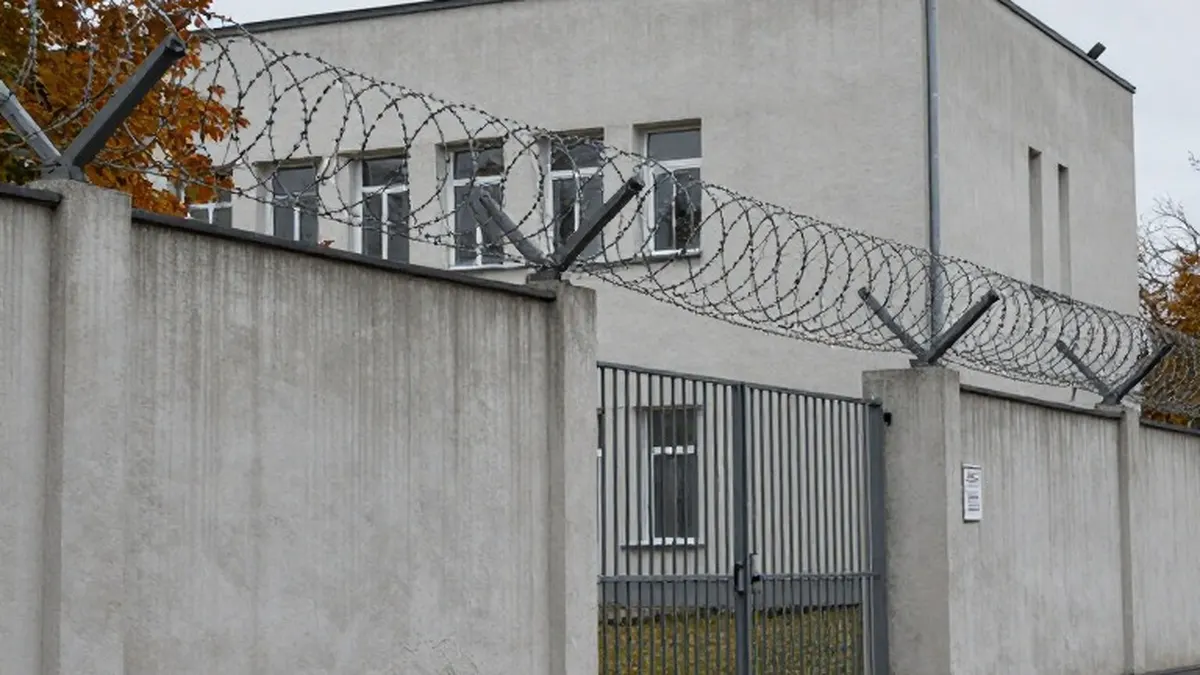
At least 22 people recognized as political prisoners by Belarusian human rights defenders are reportedly being held for compulsory psychiatric treatment. Rights defenders and doctors describe the practice as a revival of punitive psychiatry, a method used by repressive governments across the former Soviet bloc to confine opponents and critics.
Such confinement has no predetermined release date, and those subjected to it cannot receive amnesties or pardons available to conventional prisoners. Human rights defenders say they know of no political prisoner released from compulsory psychiatric treatment since 2020. The allegations against those confined range from insulting officials and removing state flags to assisting activities designated extremist and committing terrorism-related offenses.
Among those held is Maria Uspenskaya, whose husband, Andrey Zeltsar, died during a shootout with KGB officers at their Minsk apartment in September 2021. Detained that day, she was held at the Akrestsina detention center and later Valadarka Prison. In December 2021, she spent three weeks at Minsk's Navinki psychiatric complex, purportedly for an examination. Accused of complicity in the killing of KGB officer Dzmitry Fedasyuk, she was subsequently ordered by a Minsk court into compulsory psychiatric treatment.
According to the Viasna Human Rights Center, Uspenskaya remains at the Republican Scientific and Practical Center for Mental Health in Minsk. Her confinement has no fixed endpoint. Release requires doctors to determine that treatment is no longer needed, followed by a legal process. Another detainee, Polatsk artist and writer Neli Alfyorava, was ordered into treatment after a closed trial in 2024 over an allegation that she insulted a government official. She had served as an election observer and posted videos online.
Other cases include Natallya Manyla, who helped political prisoners before her arrest and was ordered into treatment for allegedly assisting extremist activities. Ivan Miksha, 21, was sent for compulsory treatment after taking Belarusian state flags off public buildings. Asker Alakhverdziyev, 25, was ordered into treatment under enhanced supervision in 2024 over allegations that he was preparing to participate in military activities.
Viasna lawyer Svyatlana Halaunyova said police officers, investigators, prosecutors and judges can request psychiatric examinations, while courts decide whether to impose treatment. People accused of insulting Aleksandr Lukashenko or other officials are frequently referred for examinations, she said. Belarusian psychiatrist Syarhey Papou, who now works in Finland, said the law requires medical reviews at least once every six months. Doctors who conclude treatment is unnecessary submit their findings to a court, but he said security agencies can influence subsequent decisions.
Former political prisoner Palina Sharenda-Panasyuk underwent examinations at Navinki but was not ordered into compulsory treatment. She described concrete walls, barbed wire and prisoners arriving in handcuffs. Rooms contained four iron beds and furniture secured to the floor, she recalled, while toilet access was limited to four times daily and showers to once a week. "The conditions are like in prison, or perhaps even worse," she told RFE/RL.
Vasyl Zavadski, a former prison doctor trained in psychiatry, said law enforcement agencies initiate referrals of political prisoners for compulsory treatment. He said the absence of ordinary release mechanisms leaves those confined in a particularly uncertain position, without the prospect of completing a defined prison sentence.
Source: RFE/RL