Gold: Touches of Gold in Contemporary Israeli Art Opens at Tower of David Museum
A new exhibition at the Tower of David Museum in Jerusalem showcases gold in contemporary Israeli art and ancient archaeology, running until March 2027.
By Pablo Montgomery ·
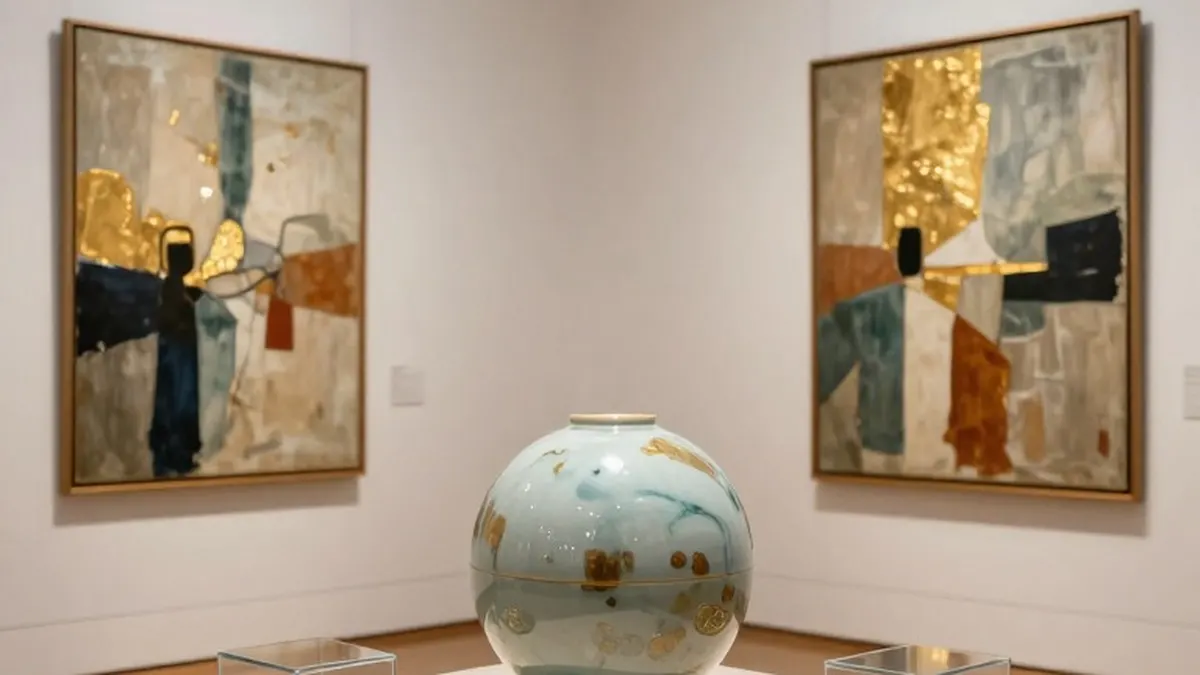
A new exhibition titled Gold: Touches of Gold in Contemporary Israeli Art has opened at the Tower of David Museum in Jerusalem. Curated by Marie Shek, the show runs until March 2027 and features works by 16 Israeli artists who utilize gold leaf, powder, thread, and metallic paint. The display also includes rare archaeological gold finds, many of which are being shown to the public for the first time.
Shek, who has curated 50 exhibitions since 1996, described the project as a way to close a circle in her career. Her first major show was intended for this venue in the mid-1990s, but logistical challenges forced her to relocate it to the Artists’ House in Jerusalem. That early exhibition, which involved sound art moving through the Citadel’s arrow slits, was a significant gamble that launched her professional path. Now, decades later, she feels the spiritual weight of the Citadel, where stones date back more than 2,000 years through various empires including the Hasmoneans, Herod, Byzantines, Mamluks, and Ottomans.
The choice of the venue is central to the exhibition’s theme. The first gold treasure ever discovered in Jerusalem’s archaeological history, a hoard of Byzantine coins, was excavated at the Citadel in the 1980s. Shek noted that while Jerusalem is often associated with conflict, she views the city as international and eternal. She rejected the common title 'Jerusalem of Gold' for the show, preferring a focus on the material’s timeless qualities rather than the city’s romanticized image.
The exhibition took four years to assemble, a delay partly caused by recent wars that allowed artists time to create new pieces specifically for the venue. Several works on display date from 2026. Shek aimed for a calm, healing experience, avoiding video installations to let the visual impact of the gold stand on its own. She described her selection process as akin to choosing only the most essential items from a wardrobe, keeping only what she truly loved.
The show features three generations of the Gershuni artistic family. Moshe Gershuni, who died in 2017, is represented by a 1995 triptych featuring acrylic gel and spray on canvas. His son Aram’s 2024 painting, Girl with Golden Hair, displays a profile with gold curls against a black ground. His granddaughter Alma’s 2026 clay relief, The Man with the Golden Helmet, continues the family’s exploration of light and form.
Other notable works include Nelly Agassi’s Stronghold (2026), a bulging embroidery piece created in collaboration with Shek. Joshua Borkovsky’s Pilgrimage (1986) uses real gold leaf to reference the Kaaba in Mecca. Yifat Bezalel’s The Window (2023) uses gold as a thin halo in a drawing that explores spiritual themes. Elena Ceretti Stein’s Fuligo Septica (2025) is paired with Dafna Shalom’s Cast in Sign Language (2026), creating a visual dialogue between a gilded hand and a bronze fist.
Leor Grady incorporates Yemenite Jewish culture by embroidering Psalm verses in gold thread, while Elham Rokni’s Hoopoe (2024) features Israel’s national bird in gold. Lilac Sasson’s The Iranian Series (2001-2003) uses gold leaf to partially obscure pages from books on Iranian art. Mosh Kashi’s Gold Ball (2012), a porcelain sphere in 24-karat gold, sits at the center of the space, reflecting the room and drawing the viewer’s eye.
Eilat Lieber, director and chief curator of the Tower of David Museum, stated that the exhibition speaks to a timeless human yearning for the pure and eternal. She noted that the works search for light within darkness, lifting visitors from the everyday toward the sublime. As Jerusalem marks the 60th anniversary of its reunification, the museum presents this contemporary layer of gold as a vital part of the city's ongoing story.
The archaeological display, curated by Ravit Nenner-Soriano, connects the modern art to the city’s ancient past. It includes a hoard of coins minted under Byzantine emperors Maurice Tiberius and Phocas, as well as a gold ring engraved with a seven-branched menorah. These items are on loan from various collections and complement the contemporary pieces in the permanent galleries.
Source: The Jerusalem Post