US Plans New Ukraine Peace Talks as Analysts Question Prospects for Agreement
Ukrainian and Russian delegations are due to meet in Abu Dhabi on November 10 and 11, with a cease-fire and security guarantees remaining central obstacles.
By Marta Price ·
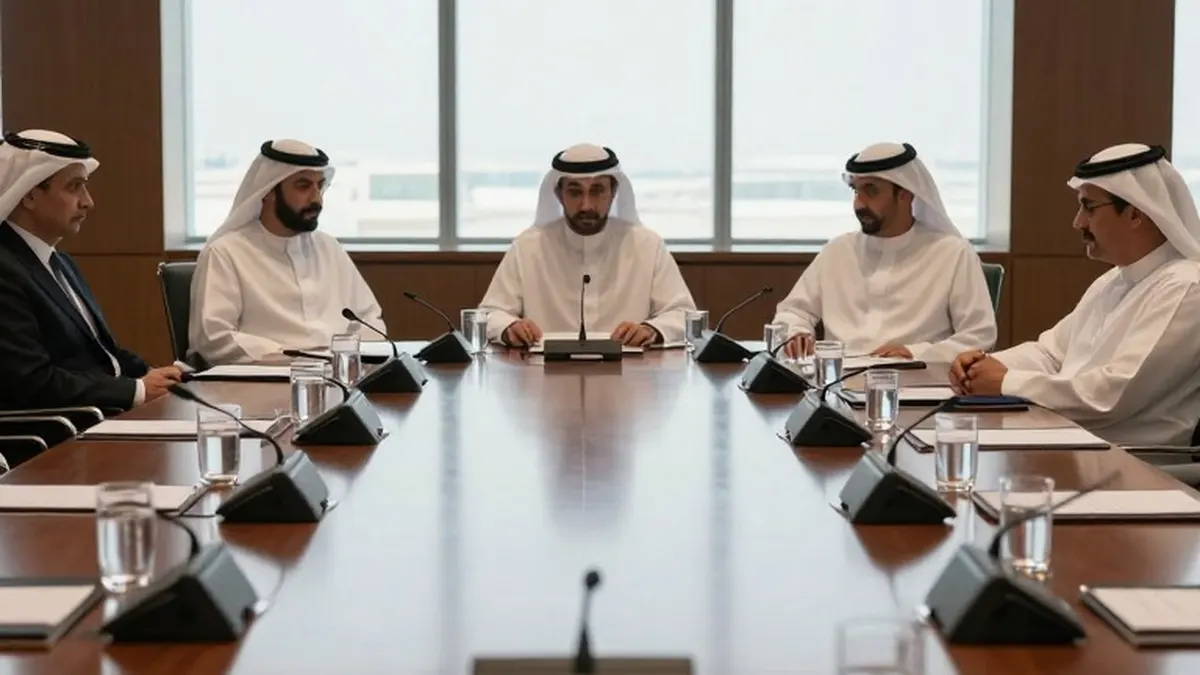
The United States plans to mediate working-level talks between Ukrainian and Russian delegations in Abu Dhabi on November 10 and 11, renewing efforts to end Moscow’s war against Ukraine after a temporary cease-fire enabled a humanitarian operation last week. Analysts and former US officials, however, say there is little evidence that the sides are approaching agreement on the main political questions.
US special envoy Steve Witkoff announced the talks on November 2, outlining an agenda covering security after the war, de-escalation, humanitarian efforts and further steps toward peace. A senior US official said Witkoff and Jared Kushner were expected to lead Washington’s delegation. Russian President Vladimir Putin accepted the new trilateral format after meeting Witkoff in St. Petersburg two weeks ago.
President Donald Trump is seeking progress after the war involving the United States, Israel and Iran interrupted diplomacy following February’s trilateral talks. Last week’s US-brokered pause in fighting allowed residents of Oleshky, a Russian-occupied city in southern Ukraine, to receive aid and leave if they chose. Fighting nevertheless continued elsewhere. Officials said Russian strikes on November 3 injured at least 62 people at a Kharkiv medical facility and damaged Ukrainian energy infrastructure, while Ukrainian drones hit a refinery in Yaroslavl, Russia.
William Taylor, a former US ambassador to Ukraine who also served as charge d’affaires during Trump’s first administration, told RFE/RL that Russia’s willingness to accept a cease-fire remained the decisive issue. Washington and Kyiv have repeatedly supported one, he said, recalling that Ukraine accepted an earlier Trump proposal for an energy cease-fire that Russia rejected. Technical discussions in January and February advanced work on monitoring arrangements without producing agreement to halt fighting.
Taylor said a Russian decision to stop fighting would allow specialists to address surveillance, enforcement and responses to violations. Heather Conley, a senior fellow at the American Enterprise Institute and former State Department official, was less optimistic about the coming meetings. She expected little beyond the resumption of talks, with another meeting or further prisoner exchanges among the more plausible results.
US officials will also meet European representatives in Brussels this week to discuss guarantees for Ukraine’s security, Europe’s future security arrangements and reconstruction support. France, Germany, Britain, the European Union and NATO will participate, according to the senior US official. Taylor argued that Europeans should also take part directly in Abu Dhabi, pointing to a proposed European-led coalition, supported by Washington, as a possible means of enforcing a cease-fire and protecting Ukraine.
Conley questioned whether proposed assurances could persuade Ukraine to accept a settlement or provide adequate protection. She argued that effective security would require NATO membership or Ukraine developing its own defensive and offensive capabilities with European assistance. Ukraine is pursuing those capabilities, she said, but needs more time and greater production capacity.
Matthew Boyse, a Hudson Institute senior fellow and former State Department official, said earlier negotiations had secured humanitarian gains, including prisoner exchanges and the return of Ukrainian children taken to Russia, while leaving fundamental disagreements unresolved. He suggested Moscow could prolong discussions in the belief that time favored Russia and that Trump might be politically weaker after the US elections.
Boyse also warned that Russia could use further localized cease-fires to seek substantial Ukrainian concessions and would prefer dealing with Washington over European governments. He characterized Putin’s broader objective as a modern counterpart to the 1945 Yalta settlement, securing recognition of a Russian sphere of influence and control over Ukrainian territory. An agreement seen as sacrificing Ukraine’s sovereignty, he argued, would harm US standing in Central and Eastern Europe.
Source: RFE/RL