European peacekeeping plan for Ukraine would permit return fire against Russian attacks
A proposed British and French-led force would operate defensively after a ceasefire, with European militaries preparing to rehearse a rapid deployment in Poland.
By Pablo Montgomery ·
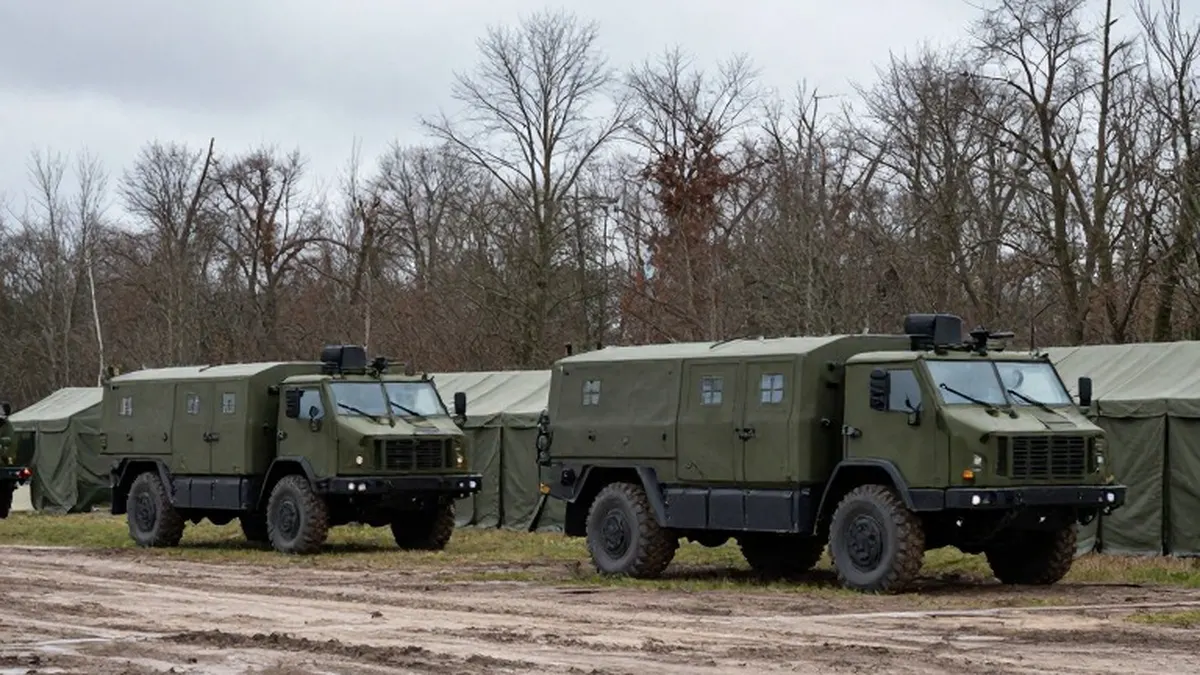
British and other European troops could defend themselves with force against Russian attacks if they are deployed to Ukraine following a ceasefire, western officials have said. The proposed stabilisation mission, led by Britain and France, would have a defensive role and is expected to consist almost entirely of European forces.
The plans remain conditional on an end to hostilities. Britain and France have outlined Exercise Koalicja, an 11-country rehearsal scheduled for later in November in Poland, to test how quickly participating militaries could send personnel to Ukraine. It will involve 2,800 soldiers, sailors and aviators, including 1,500 French troops from the 1st Division and 300 British troops from the 7th Light Mechanised Brigade.
Poland, Germany, Belgium, Estonia, Lithuania, the Netherlands, Spain, Sweden and Turkey will also participate. Lt Gen Tom Bateman, who commands the force, said the exercise would test preparations developed over more than a year. He said participating governments were committed to “providing robust and binding security guarantees for Ukraine following a cessation of hostilities”.
Bateman said the mission would operate outside Nato, with little or no American support expected for a deployment. Officials said its preparations did not depend on US systems, including Elon Musk’s Starlink satellite communications technology. President Donald Trump has ruled out sending American peacekeepers to Ukraine if a lasting ceasefire is reached, although Washington has repeatedly sought to lead negotiations between Kyiv and Moscow.
Questions about the dependability of American assistance have grown internationally. In October, the US abruptly limited Ukraine’s access to Starshield, the military version of Starlink, for roughly 10 days, disrupting medium-range drone missions. Meanwhile, renewed diplomatic efforts this autumn have made little headway, although US-brokered talks involving all three countries are planned for later in November.
Russia and Ukraine have continued striking each other’s energy infrastructure. Their air-raid warning apps were also hacked on Sunday and Monday, with the Ukrainian service briefly issuing alerts about nuclear and chemical dangers and fighting in the streets. The possibility of another outbreak of hostilities after a ceasefire remains a concern, given Russia’s history of low-level attacks during the ceasefire between 2014 and 2022.
A central task for the proposed multinational force would be helping Ukraine rebuild and strengthen its armed forces after the war. Western personnel would be stationed well away from the front, but their rules of engagement would permit self-defence against Russian drone attacks. That leaves uncertainty over how Moscow might react to an armed encounter involving the mission.
The wider plans also envisage fighter patrols to support the reopening of Ukraine’s commercial airports. A separate effort led by Turkey would remove mines from the Black Sea, with the aim of restoring routes for grain exports and other maritime commerce.
Source: The Guardian