Lebanon disconnects public institutions over unpaid electricity bills
Power cuts to about 100 public bodies deepen a dispute between the energy minister and the government as experts call for structural reform.
By Pablo Montgomery ·
Lebanon’s Ministry of Energy and Water has started disconnecting electricity to about 100 public institutions with overdue bills, local media reported. The measure took effect on Monday, escalating a dispute between Energy Minister Joe Saddi and the government over funding, fuel costs and payments owed to the state electricity company.
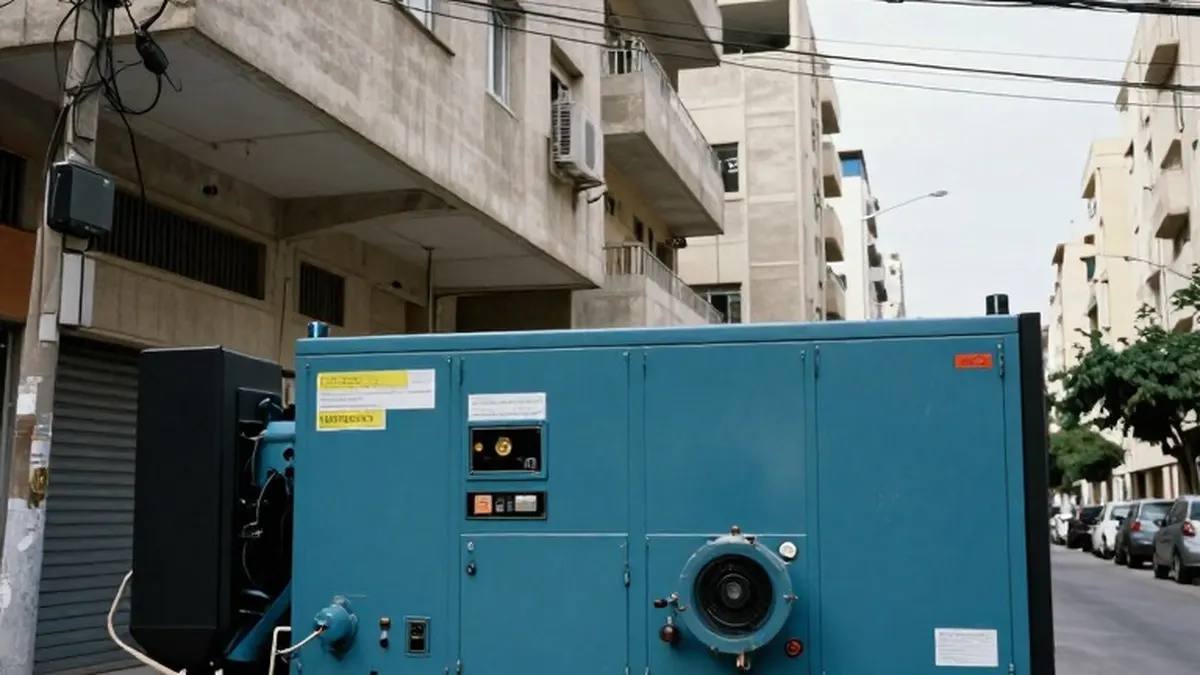
Saddi has been boycotting cabinet meetings, arguing that the government has failed to address his demands to expand electricity supplies and ease the sector’s financial pressures. His campaign comes as residents continue to receive limited state power and depend heavily on costly private generators, many operated by political parties or people connected to those in power.
Power shortages have troubled Lebanon for years, but supplies deteriorated sharply after the economic and banking crisis began in 2019. Beirut previously received about 21 hours of state electricity daily. In recent years, that has fallen to between two and four hours, with no supply on some days. Hopes for improvement under the government led by reformists that took office in early 2025 have yet to translate into reliable service.
Households are also facing rising prices. The World Bank forecasts year-on-year inflation of 17.5 percent in Lebanon in 2026. Fuel costs linked to the United States-Israel war on Iran have sharply increased the price of electricity from private generators. Lebanese energy expert Jessica Obeid said expensive diesel, ageing state power plants and corruption throughout the supply chain require comprehensive changes rather than temporary measures.
The confrontation has fuelled speculation about a cabinet reshuffle or Saddi’s resignation. A member of the right-wing Lebanese Forces party, Saddi told Lebanese media he had pressed Prime Minister Nawaf Salam’s government to prioritise electricity earlier this year, before easing that pressure when Israel’s war on Lebanon intensified in early March. Saddi and his party objected to the draft 2027 budget announced in October, saying the sector had received insufficient attention. Three other Lebanese Forces ministers joined his cabinet boycott last Thursday.
Sami Zoughaib, an economist and research manager at the Lebanese think tank The Policy Initiative, described the boycott as an effort to protect the party’s public support. Saddi has also faced criticism from Gebran Bassil, leader of the rival Free Patriotic Movement. Bassil previously held the energy portfolio but did not fulfil his own promise to provide state electricity around the clock.
Qatar has offered potential support. During a visit to Beirut last month, Qatari Prime Minister Sheikh Mohammed bin Abdulrahman bin Jassim Al Thani confirmed plans for an energy partnership that includes a solar project. Reuters subsequently reported that Qatar had offered to construct two power plants over three years and supply liquefied natural gas under a 20-year agreement. The proposed deal still requires approval.
Analysts say additional supply would need to be accompanied by structural reform, potentially including reconstruction of the electricity grid. Zoughaib said Lebanon could no longer afford its former model of state-subsidised electricity, which consumed a substantial share of annual government spending. Saddi has proposed public-private partnerships, but experts said repeated Israeli attacks, instability and unresolved financial and banking problems would discourage investment.
Obeid said the damaged grid also needs rehabilitation and criticised successive governments for pursuing short-term measures without a clear direction for the sector. “It just needs a vision and someone to take the bold decisions,” she said.
Source: Al Jazeera