Phoenix museum exhibit lets famous guitars, mandolins and banjos speak in silence
The Musical Instrument Museum's Acoustic America exhibition, open through Sunday, presents instruments played by celebrated jazz, folk and bluegrass artists as stand-ins for the musicians themselves.
By Juan Gonzalez ·
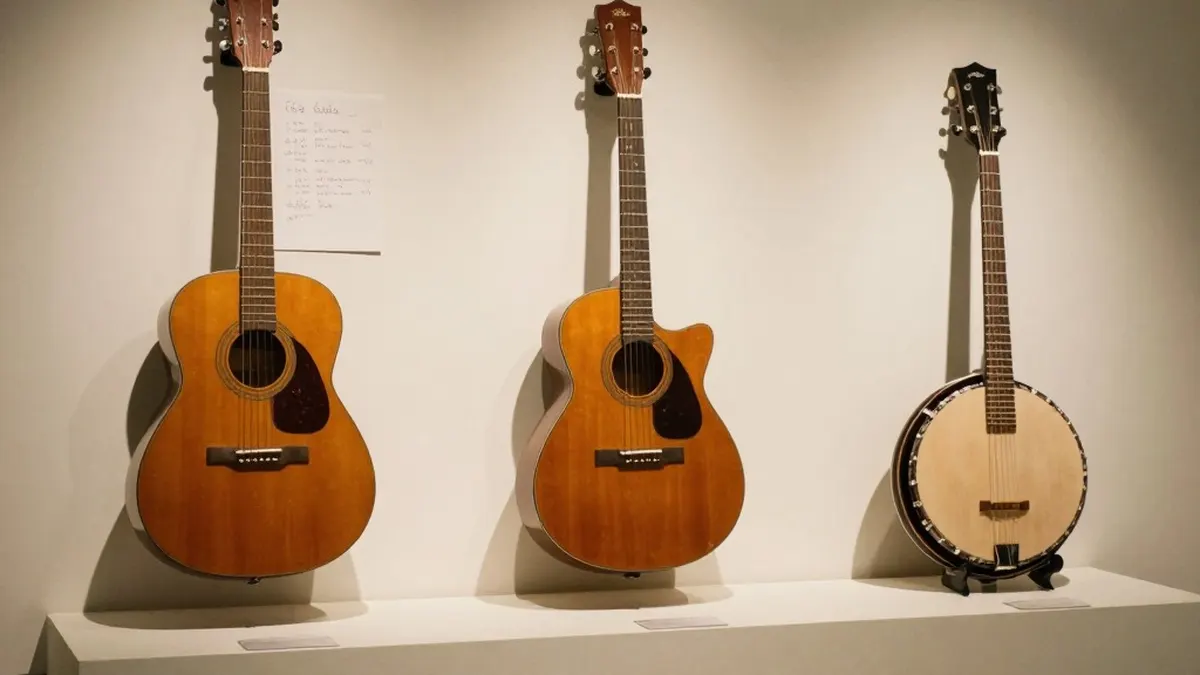
The Musical Instrument Museum in Phoenix is showing an exhibition of stringed instruments once played by some of the most famous jazz, folk and bluegrass artists in American history. The show, called Acoustic America: Iconic Guitars, Mandolins and Banjos, closes Sunday.
The gallery holds guitars, mandolins and banjos associated with musicians such as Earl Scruggs, David Grisman and Mississippi John Hurt. Despite the subject, the room is quiet. The instruments are mounted on walls and platforms, and none are played.
Curator Rich Walter, who spoke with KJZZ's The Show about the exhibition, said the instruments are a way into the lives of the people who played them. "People certainly see the tangible musical instruments, but we really strongly believe that that's our way of introducing people to human beings from around the world. So they stand for the people," Walter said.
Some of the pieces carry traces of their working lives. A few still have handwritten set lists attached to their sides, including a guitar belonging to Peter Yarrow of Peter, Paul and Mary. "These are hard working guitars that have been on stages and under stage lights," Walter said.
The materials on display are simple: wood, empty space inside the bodies and, in the case of the banjo, skin. Walter said that earthiness is part of the appeal. "It's fingertips, you're holding things in your lap, it's intimate. These wooden vibrating things that you use with your hands and your fingertips, it's just such a direct human connection," Walter said.
The silence is deliberate in a sense, since the instruments do not have a single sound of their own. Walter said they were chosen because each represents a particular person, and a given instrument sounds different depending on who plays it. In some cases the artists have died, and the instruments remain the closest physical link to them. "The finish was worn off by the hands of this great person," Walter said, describing objects that bear witness to "days and nights and practice and use."
That idea echoes a comment from saxophonist Joshua Redman, who appeared on The Show recently to discuss his relationship with his instrument. "I think ultimately what I'm striving for, and what a lot of us are striving for, is for the instrument to disappear," Redman said. The exhibition suggests the instruments are remarkable less for how they were built than for having been the means through which musicians made themselves heard.
Walter also pointed to the way people respond to sound. "Our brains are so conditioned to direct sounds," Walter said, citing a parent's voice and the sound of weather moving through the air. Plucked and strummed strings, Walter said, can produce the same kind of direct effect. "It's the way a human being gets that string vibrating that can be very powerful and very direct, and leave very powerful emotional impressions," Walter said.
Visitors who want to see the exhibition have until Sunday, when it ends at the museum in Phoenix.
Source: KJZZ