Canada proposes splitting German submarine purchase into batch of eight and possible four more, sources say
Ottawa has floated guaranteeing eight Type 212CD submarines from TKMS now and deciding on four more later, raising questions about promised economic benefits.
By Pablo Montgomery ·
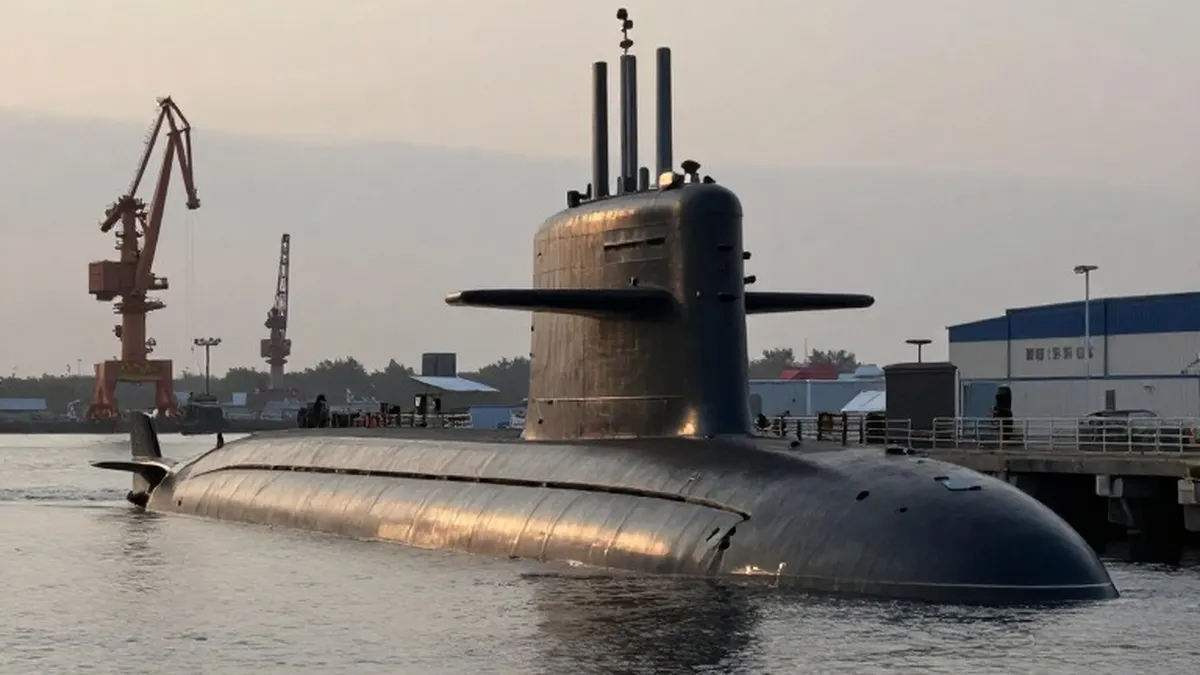
Canadian negotiators have proposed dividing the planned purchase of German-built Type 212CD submarines into two batches, with a guaranteed order of eight boats up front and a possible follow-on buy of four more in the future, three confidential sources told CBC News.
The proposal surfaced during meetings last week in Ottawa between federal officials, led by the Defence Investment Agency, and representatives of German submarine builder TKMS and Norwegian defence company Kongsberg. The sources said the Canadian side has been discussing a split order for several weeks, since a round of meetings in Europe in September.
The idea is being watched closely in Europe. German government officials are studying what a reduced initial order would mean for the $86 billion in economic investment promised to Canada last summer, while TKMS is consulting its 400 suppliers about the potential impact.
When Prime Minister Mark Carney announced last July that the TKMS bid had beaten rival Hanwha Ocean of South Korea, he said Canada was committed to buying "up to 12 submarines." Because deliveries would not begin until the mid-2030s and would likely stretch over more than a dozen years, sources said federal officials want to preserve flexibility for future governments. There is also debate about whether crewed submarines could one day be overtaken by cheaper or more effective drone technology, and one source said cost is a consideration.
Replacing the navy's aging Victoria-Class boats with 12 new submarines is estimated to cost between $20 billion and $24 billion, with full life cycle costs for operations, maintenance and repairs expected to exceed $100 billion over two decades. The navy has said it needs 12 boats to patrol Canada's three-ocean coastline and join allied missions overseas, notably in the Indo-Pacific.
Sofiya Sapeha, a spokesperson for Stephen Fuhr, the secretary of state for defence procurement, said the government reiterated that the pledge was for "up to 12 modern submarines that will help to protect Canadians by replacing the aging Victoria-Class fleet." She said the Defence Investment Agency is working to secure a contract with maximum benefits for Canadians across the country, but added that because the procurement process is active, officials cannot comment on the content or status of the negotiations.
Carney has set a deadline of securing a contract by no later than the end of 2027. One source with knowledge of the proposal said Ottawa has consistently spoken of "up to 12" boats and that an upfront commitment of eight remains "a very large number" of submarines.
TKMS spokesperson Andrew Bernardo declined to discuss specifics but said negotiations with the Canadian government remain on track. "Negotiations continue productively, and we are focused on advancing the long-term strategic partnership in a manner that maximizes opportunities for Canadian industry," he said.
Thomas Röwekamp, head of the German Parliament's defence committee, was also in Ottawa last week. Though not part of the negotiations, he said he was confident Canada, Germany and partner Norway would hammer out their differences, calling the deal important for NATO. "We hope they will order 12, and we are doing a lot to make the deal real," he said, noting that Germany and Norway gave up production slots so Canada could receive four boats by 2036.
Since Canadian shipyards cannot currently build submarines, economic benefits have been central to the competition. The German pitch included partnering with Alberta on a large-scale carbon capture facility using proprietary TKMS technology, investing in the modernization and expansion of the Port of Churchill in Manitoba to export liquefied natural gas and critical minerals, building a heavy torpedo factory and jointly developing and testing hypersonic missiles. Analyst Dave Perry of the Canadian Global Affairs Institute said splitting the order could come with "downsides," shrinking the promised benefits unless "you commit at the beginning to buying the whole enchilada." But he noted batching is a proven risk mitigation tool, pointing to Ottawa's plan to buy 15 new destroyers with an initial commitment to just three warships from Irving Shipbuilding Inc. in Halifax.
Source: CBC News